



Pipetting is repetitive, precision-driven, and often underestimated. Yet it is one of the most physically demanding tasks in everyday lab work. Small motions. High frequency. Zero room for error. Over time, even the most experienced professionals feel it in the thumb, wrist, and shoulder.
That’s where a truly ergonomic pipette changes everything. Not just by reducing strain, but by improving accuracy, consistency, and workflow efficiency.
Let’s break down what modern labs should look for and how advanced ergonomic pipetting technology, like that found in the CAPP Solo Pipette and CAPP Bravo Pipette, is redefining everyday lab work.
Why Is Ergonomics No Longer Optional?
Labs today move fast, workflows are complex and repetition is constant. Traditional mechanical pipettes rely entirely on physical force. Every aspiration. Every dispense. Every tip ejection. Multiply that by hundreds of cycles a day, and the impact becomes obvious.
Poor ergonomics lead to:
- Higher risk of repetitive strain injuries
- Operator fatigue
- Reduced precision over long sessions
- Slower workflows
Important Things to Consider When Picking an Ergonomic Pipette
Picking a good ergonomic pipette isn’t just about making sure it’s accurate. Comfort, how it’s designed, and how easy it is to use matter a lot. These factors help lessen strain and boost efficiency in daily lab work.
Design That is Light and Well-Balanced
Why weight balance matters: A designed ergonomic pipette spreads its weight from the top to the tip. If the balance is off, it can strain your wrist and forearm if you use it . A lightweight pipette feels less heavy in the hand, making it easier to handle during long hours of use.
How balance helps prevent wrist strain. A well-balanced pipette keeps the wrist in a natural resting position. This avoids awkward movements and frequent stress reducing the chances of discomfort or injuries that last over time.
Low Plunger Force & Smooth Handling
Why less plunger force adds ease? A key trait of an ergonomic pipette is needing less plunger force. When the plunger moves and , it lowers thumb strain easing muscle pressure. This effortlessness makes tasks like sucking in and releasing liquids more comfortable.
Perks for long pipetting tasks – Tasks such as repeated pipetting, making dilutions, or handling large sample numbers become easier with less plunger resistance. It allows users to work longer hours with steadier hands and better precision.
Comfortable Grip and Hand Feel
Shaped handles and spots for fingers. A good ergonomic pipette should feel natural in your hand. Shaped handles and finger rests, along with textured grips, help you hold it and stop it from slipping even if you use it for a long time.
Fits hands of various sizes. A well-made ergonomic pipette works well for all sorts of hand sizes. This way, people sharing the same lab equipment stay comfortable and won’t have to keep adjusting their grip.
Simple Tip Ejection System
Less strain on the thumb, Ejecting tips is one of the most repeated moves in pipetting. A smart pipette design includes an easy-to-use ejection system that takes almost no effort making it much easier on your thumb.
Importance of simplifying repetitive tasks. Labs that handle high volumes of work find that easy tip ejection speeds things up. This helps a lot with comfort and keeps workflows running when processing samples non-stop.
Easy-to-Read Volume Display & User-Friendly Adjustments
Reducing strain on the eyes, A simple and clear volume display helps avoid tired eyes and gets rid of any guessing during volume setting. This matters more in labs with fast-moving activities.
Preventing mistakes with volume settings. Reliable adjustment controls stay secure and smooth, which means no accidental changes during pipetting. This keeps the process accurate and allows users to work.
Everyday Lab Uses That Rely on a Comfortable Pipette
A comfortable pipette is a must wherever pipetting happens every single day in large amounts.
- Diagnostic and IVD labs: Labs handling many samples and needing precise processes require tools that feel comfortable and deliver steady performance.
- Research and academic labs: With experiments that last hours, comfortable pipetting helps improve efficiency and keeps users healthy.
- Pharma and biotech facilities: Precise results and operations without causing tiredness ensure accuracy and follow regulations.
- Quality control and testing labs: Repeated tasks run smoother over time with ergonomic designs that ensure steady performance.
How the CAPP Bravo Pipette Delivers on Ergonomics
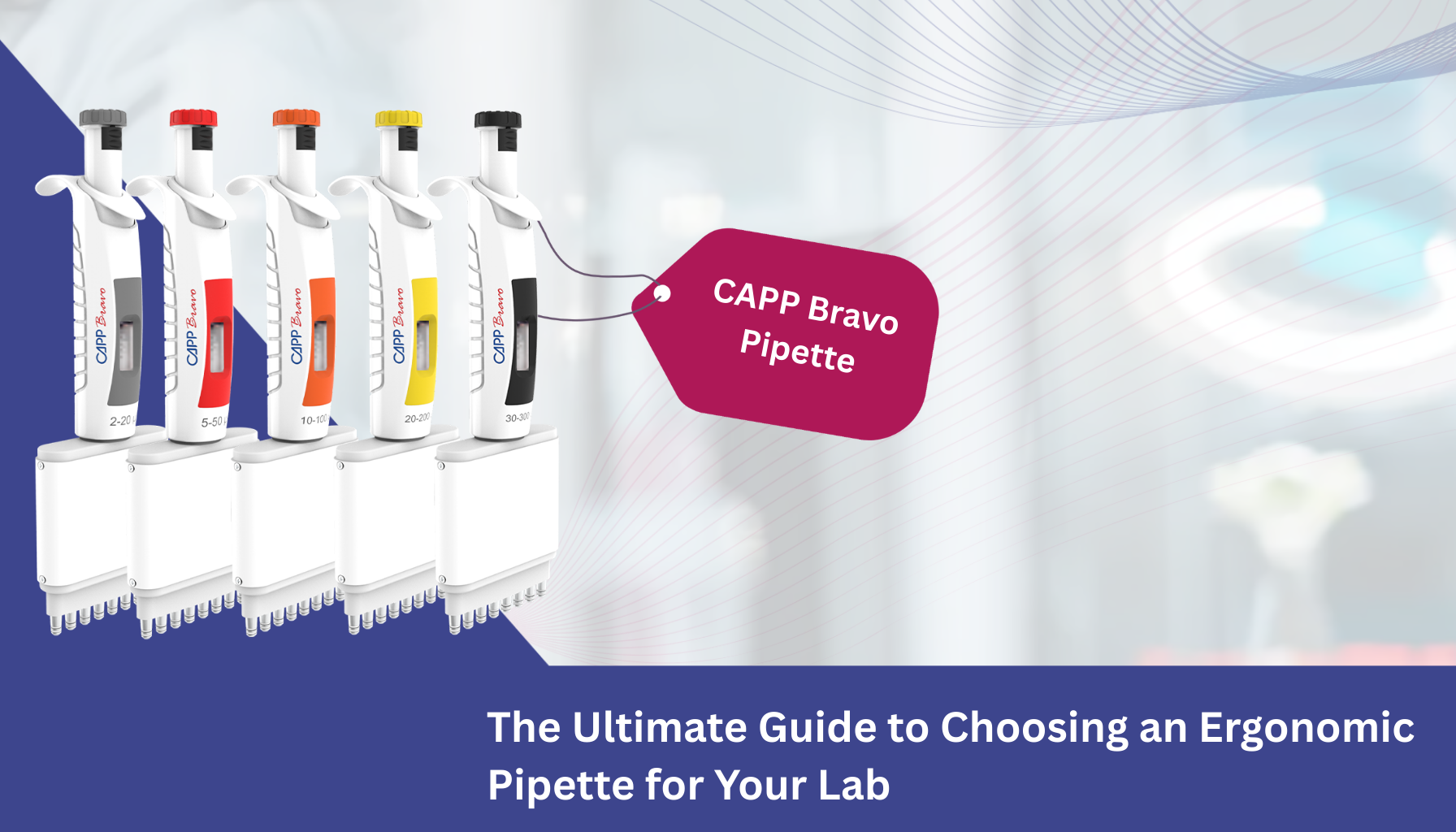
The CAPP Bravo Pipette has been crafted to provide a comfortable pipetting experience, making it trustworthy for daily lab tasks.
- Created to allow easy pipetting without fatigue, even for long hours.
- Built light and well-balanced to ease wrist pressure.
- Features a plunger that moves with little effort for better ease of use.
- Has a comfy, hand-shaped grip that works well for long pipetting tasks.
- Delivers dependable precision and reliability even for frequent or routine tasks.
- Oversized volume indicators for easy reading
- Fully autoclavable construction for sterility
- A metal shaft with double O-rings for durability at micro volumes
The CAPP ergonomic pipette blends comfort with consistent results. It boosts efficiency and accuracy making it ideal for today’s labs.
Final Thoughts
An ergonomic pipette is more than a comfort upgrade. It’s a performance tool. A precision instrument. A long-term investment in people and results.
Whether through the intelligent electronic control of the CAPP Maestro Pipette or the refined manual precision of the CAPP Bravo Pipette, modern ergonomic design empowers labs to work more efficiently, consistently, and comfortably.