




The productivity of extracting nucleic acids and proteins depends on chemistry and the physical design of the filtration system. Many molecular biology labs still face unexplained drops in yield or purity even with improved methods and good quality reagents.
People often overlook the spin column’s impact. How well the membrane sits, the surface finish, material quality, and stability during spinning all play a key part in how well the extraction works. This piece looks at how spin column design has an impact on recovery and purity, and why picking the right column is key to get reliable results in PCR, NGS, and cloning.
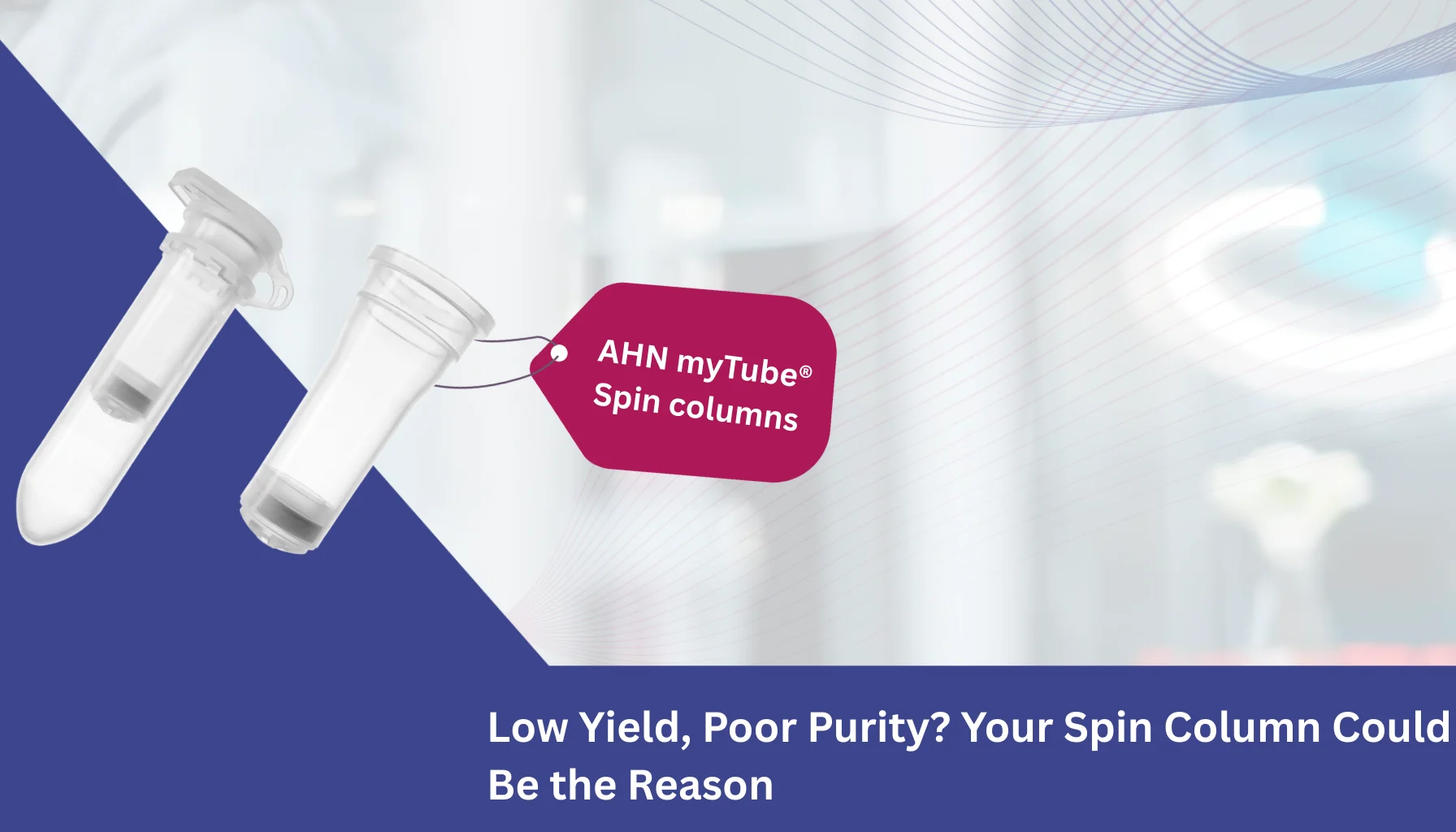
The spin column serves as the physical interface for biomolecule binding and elution. If the column architecture or the filter quality is substandard, the efficiency of the entire extraction process is compromised. AHN Biotechnologie GmbH has addressed these technical bottlenecks through the development of the AHN myTube Spin Columns, providing a system engineered for high-recovery purification and filtration.
Understanding the Mechanics of Yield Loss
Low yield is often a result of inefficient binding or incomplete elution. In many standard columns, the filter membrane may be unevenly seated, allowing the sample to bypass the matrix during centrifugation. This channeling effect means a significant portion of the target DNA or RNA never interacts with the binding surface.
The AHN myTube Spin Columns utilize a precise design in which the filter tube (0.8 mL) is nested perfectly within a 2.0 mL receiver tube. This ensures that the centrifugal force is applied uniformly across the membrane. Furthermore, the internal surface of these columns is produced using diamond-finished molds. This results in an ultra-smooth polypropylene surface that prevents the non-specific binding of samples to the tube walls. By ensuring that the sample is directed entirely through the filter and that the target molecules do not stick to the plastic, the AHN myTube system maximizes the final concentration of the eluate.
The Impact of Column Purity on Downstream Assays
Purity is defined by the absence of contaminants such as salts, proteins, and residual ethanol. However, a less-discussed contaminant is the presence of leachables from the plasticware itself or biological contaminants from the manufacturing process. If a spin column contains traces of DNase, RNase, or human DNA, the integrity of the sample is threatened before the laboratory work even begins.
AHN myTube Spin Columns in a controlled environment to ensure they are certified free of Endotoxin, DNA, RNA, PCR inhibitors and pyrogens. Beyond biological purity, the use of high-quality virgin polypropylene ensures that no chemical additives leach into the buffers. When using a spin column for sensitive applications, the chemical inertness of the hardware is just as critical as the quality of the silica or glass fiber membrane inside.
Specialized Membranes for Diverse Protocols
A common reason for poor purity is using a generalized filter for a specialized task. Filtration requirements vary significantly depending on the size of the molecule and the complexity of the lysate. We provides a range of filter options within the AHN myTube Spin Column line to match specific experimental needs:
Glass Fiber (GF): Available in various grades, such as GF-F2, these membranes are optimized for the binding of DNA and RNA. The structure of the fiber allows for high loading capacity and efficient washing of salts.
Polyethylene (PE): This material is normally employed for coarse filtration, often serving as a support medium for another membrane in filtering out large particles of cellular origin from the sample lysate.
Cellulose Acetate (CA): These membranes are chosen when protein binding is a requirement, which makes them suitable for protein clarification without loss of the protein of interest to the surface of the membrane.
Regenerated Cellulose (RC): This membrane type is unique for the filtration of small molecular-weight substances. Its chemical resilience is high, while non-specific binding is extremely low, enabling small molecular-weight target compounds to be recovered without any loss.
Polyvinylidene Fluoride (PVDF): Sensitive biological applications can be achieved using PVDF, which is available in 0.22 µm and 0.45 µm grades. They are very effective in clarification applications where protein and chemical durability are of utmost importance.
Carrying out this procedure and selecting the correct membrane for the specific key applications can eliminate the carryover of inhibitors, which usually results in failed PCR or degraded sequencing libraries.
Structural Integrity and Centrifugation Performance
The physical stress of centrifugation can also impact purity. If a tube deforms under high g-forces, the seal between the column and the receiver tube can be compromised, leading to aerosol contamination or “spray-back” of wash buffers into the purified sample.
The AHN myTube Spin Columns are designed for high-speed performance. They are rated to withstand up to 25,000 × g in fixed-angle rotors. This structural rigidity ensures that even during aggressive wash steps—necessary for removing tightly bound contaminants—the column remains stable and the separation remains absolute.
Streamlining Laboratory Workflows
Precision in the lab is not only about the results but also about the reproducibility of the process. The AHN myTube system is designed to fit all standard microcentrifuges, making it a versatile tool for any molecular biology suite. Because the system is available as a complete set including the receiver tube, it reduces the risk of using mismatched components that could lead to leakage or sample loss.
When a laboratory experiences a sudden drop in purification quality, it is essential to look beyond the chemistry of the kits. The hardware—the spin column—must be able to facilitate the chemistry effectively. Through the AHN myTube Spin Columns, AHN Biotechnologie GmbH offers a solution that minimizes sample retention and maximizes purity through superior material science and engineering.
Optimizing Your Filtration Strategy
In addition, high-quality results demand not only high-quality reagents but also high-quality consumables. If an application consistently battles low yield and impurity, upgrading to a high-performing filtration device is an obvious improvement to make. AHN myTube Spin Columns offer high reliability for work that demands high performance and ensure that the equipment works for, not against, the intended goal. By maintaining strict manufacturing standards and offering a variety of specialized membranes, AHN Biotechnologie GmbH provides the precision required for modern analytical techniques.