




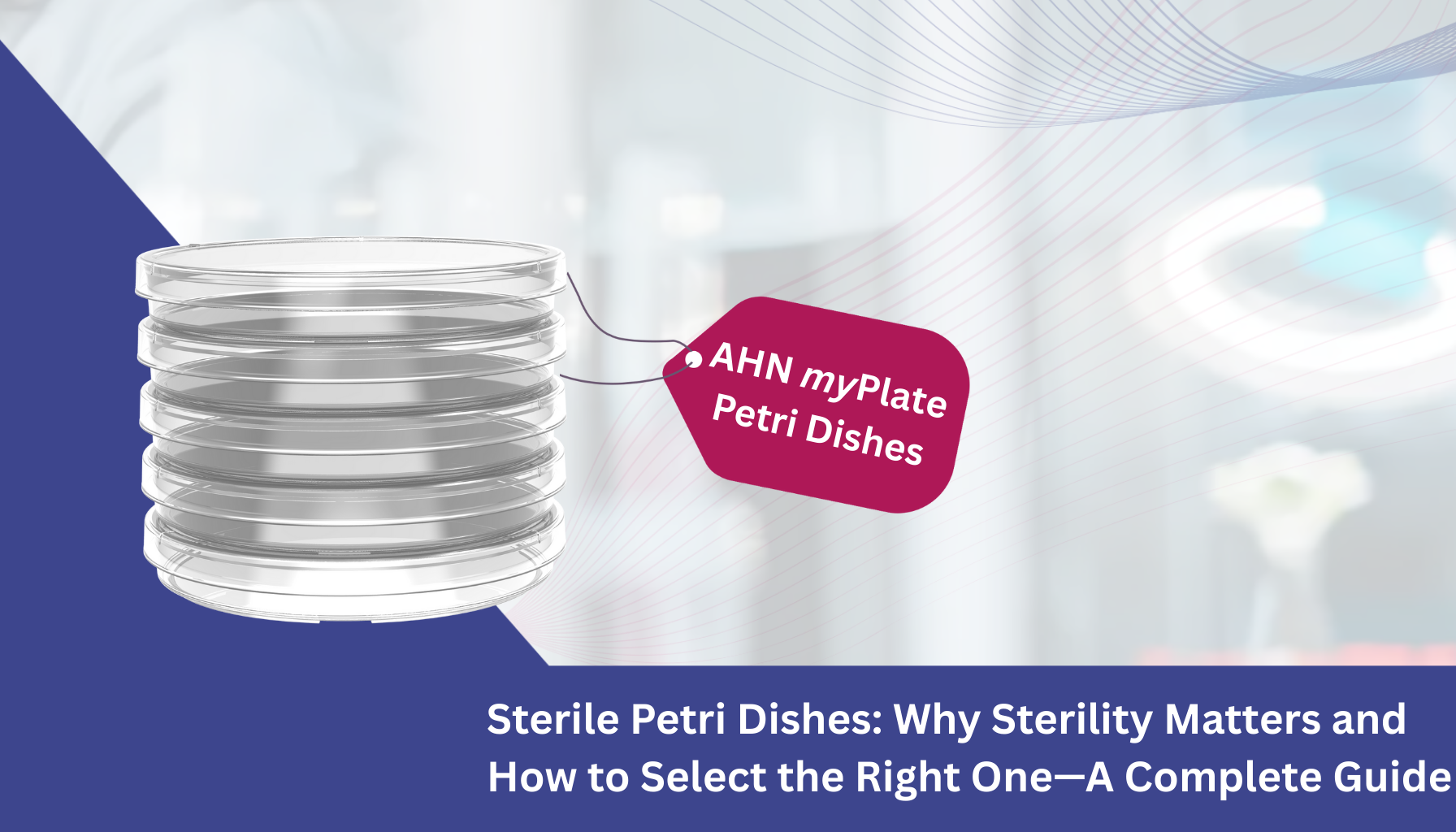
In each microbiology laboratory, Petri dish is one of the most crucial and regularly used lab consumables. But while reliability, purity, and dependable effects are the intention, sterile Petri dishes become a non-negotiable requirement. Whether you are culturing bacteria, fungi, or cells, the sterility of your Petri dish immediately influences the success and accuracy of your test.
In this comprehensive guide, we discover why sterility is important, how sterile Petri dishes aid correct microbiological cultures, and how to pick the proper Petri dish for your automated machines. This article is brought to you via AHN Biotechnologie GmbH, your trusted accomplice in fantastic laboratory consumables.
1. What Are Petri Dishes?
A Petri dish is a shallow, cylindrical, lidded dish typically made from plastic. It serves as a growth platform for microorganisms, allowing scientists to culture, observe, and analyse them effectively.
Petri dishes are widely used in:
- Microbiology laboratories
- Pharmaceutical testing
- Food and beverage quality control
- Environmental monitoring
- Cell culture and research
While they may seem simple, their impact on scientific accuracy is huge—especially when sterility is involved.
2. Why Sterility Matters in Microbiology?
In microbiology, contamination is the enemy. Even an undesirable microorganism can invalidate a whole test. This is why sterile Petri dishes play an important role.
Key reasons sterility is essential:
A. Prevents cross-contamination
Using sterile dishes ensures that only the intended microbial culture—such as specific bacterial, fungal, or yeast strains—grows on the culture media. Contaminants, including airborne microbes or environmental microorganisms, can lead to misleading results by mimicking mutations, metabolic changes, or unexpected biological reactions.
B. Ensures reliable and reproducible results
Experiments need controlled conditions. Non-sterile Petri dishes introduce unknown variables that compromise data integrity and repeatability.
C. Protects sensitive microorganisms
Some organisms require extremely controlled environments. Even slight contamination can destroy these delicate cultures.
D. Maintains industry and regulatory standards
In prescribed drugs, food, and medical studies, sterility is mandatory for compliance with ISO, GLP, GMP, and other standards.
Sterility isn’t elective—it is the inspiration of honest laboratory paintings.
3. Types of Petri Dishes
Different experiments require distinctive Petri dish designs. Here are the maximum, not unusual, types:
A. Standard Sterile Petri Dishes
These are pre-sterilized and, for my part, packed or stacked. Ideal for ordinary bacterial and fungal cultures.
B. Vented Petri Dishes
Include small vents to improve air circulation. Useful for aerobic cultures or fast-growing microorganisms.
C. Non-vented Petri Dishes
Designed to reduce evaporation—ideal for long-term incubation or sensitive cultures.
4. Key Features to Look for in Petri Dishes
Not all Petri dishes are the same. Here are the features that matter most:
A. Material Quality
Look for Petri dishes made from premium-quality, medical-grade polystyrene, which offers excellent optical clarity, chemical resistance, and suitability for microbial culture applications.
B. Surface Uniformity
The bottom must be perfectly flat to ensure uniform agar distribution and even microorganism growth.
C. Ventilation Options
Choose between vented or non-vented based on your culture type.
D. Strong Lid Grip
Ensures secure closure while preventing condensation buildup.
E. Stackability
Ridges and uniform thickness help with stable stacking during incubation or storage.
F. Sterile Packaging
Petri dishes are supplied in sterile, sealed packs in multiple layers that maintain sterility until opened under recommended laboratory conditions. This packaging method ensures protection from contamination during storage and handling prior to use.
G. Certification
Look for certification like we have for our AHN® myPlate® Petri Dishes:
- DNase-free
- RNase-free
- Non-pyrogenic
- Validated sterilization certificates
- Gamma Sterility with SAL 10-6
These features ensure precision and reliability in every experiment.
5. How to Select the Right Sterile Petri Dish
Choosing the right Petri dish depends on your application. Consider these factors:
A. Type of microorganism
- Aerobic organisms → Vented dishes
- Anaerobic organisms → Non-vented dishes
B. Experiment duration
- Short-term cultures → Standard dishes
- Long incubation → Non-vented to reduce evaporation
C. Media volume
Larger dishes (100 mm or 150 mm) are suitable for high-volume cultures or spread plating.
D. Lab workflow
Disposable dishes may reduce contamination risk in fast-paced labs.
6. Common Applications of Sterile Petri Dishes
Sterile Petri dishes are used in nearly every biology-focused industry. Major uses include:
- Bacterial and fungal culture: The most common application is growing and analysing microbes.
- Cell culture: Used to grow cell lines under controlled conditions.
- Environmental monitoring: Air, water, and surface sampling in hospitals and cleanrooms.
- Food and beverage testing: To detect spoilage organisms and ensure quality control.
- Pharmaceutical manufacturing: Sterile dishes are essential for sterility testing and contamination checks.
- Academic and industrial research: Used for molecular biology, microbial genetics, and biotechnology.
Conclusion
AHN Petri dishes are critical laboratory consumables that directly influence the accuracy, reliability, and reproducibility of microbiological work. Their sterile design prevents contamination, supports controlled microbial growth, and ensures compliance with global laboratory standards.
When choosing the proper Petri dish, consider elements which include material, design, ventilation, and application. AHN Biotechnologie GmbH offers a wide variety of sterile Petri dishes designed with outstanding precision, readability, and sterility to meet the desires of present-day laboratories.