



Two labs follow the same protocol. Both spin samples at 5,000 RPM. One gets a perfect pellet. The other gets cloudy supernatant. Same RPM, different results. How?
That confusion happens daily in modern laboratories. Especially during Benchtop Centrifuge selection. Most buyers compare centrifuges using RPM alone. Manufacturers advertise RPM aggressively because it looks impressive.
But RPM never tells the complete story; RCF does. And if your protocols demand reproducible results, understanding the core difference between RCF and RPM centrifuge specifications becomes critical.
RPM Trap: Most Labs Fall Into
RPM means Revolutions Per Minute. It measures rotational speed only. That sounds useful, but your samples do not respond to speed alone; they respond to force.
That force is called the Relative Centrifugal Force. It tells you exactly how much centrifugal force reaches your sample. Two centrifuges can spin at identical RPMs. Yet generate completely different separation results. Why?
Because of the rotor radius, it changes everything. A larger rotor creates a higher force at the same RPM. A smaller rotor creates a lower force. That means your protocol may fail on another instrument.
RPM vs RCF: What Actually Changes Your Results
RPM is simple rotational speed. RCF measures the actual centrifugal force applied to samples.
In every practical experiment, force matters more.
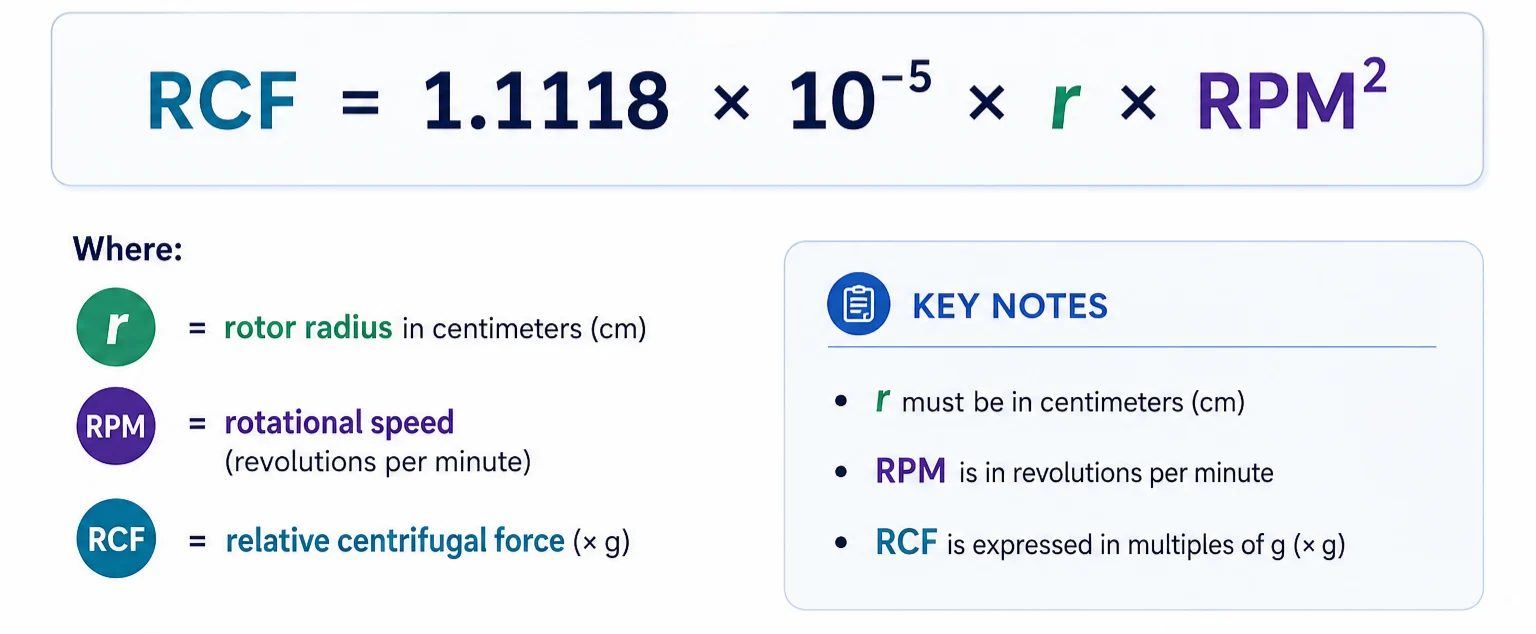
Notice something important. RCF depends on BOTH RPM and rotor size.
RPM alone ignores rotor geometry completely. That is why protocols increasingly specify g values instead of RPM. A clinical centrifuge with a larger rotor may generate far higher force than a compact microcentrifuge running at the same RPM.
And force scales dramatically. Double the RPM, and the force increases four times.
That small change can completely alter sedimentation behavior.
Why RCF Directly Impacts Accuracy?
Centrifugation is really controlled sedimentation. Your cells, proteins, DNA fragments, and particles separate because force pushes them outward. If the force stays insufficient, separation becomes incomplete. If force becomes excessive, samples may get damaged. That balance matters everywhere.
Low RCF can leave debris floating in the supernatant. Clinical labs may see inconsistent diagnostic results. Research teams may struggle with impure preparations. High RCF creates another problem. Cells may lyse. Proteins may denature. Nucleic acids may degrade.
This is why relative centrifugal force matters more than advertised speed. RCF creates reproducibility between instruments. RPM does not.
Common RCF Values Across Laboratory Applications
Different applications demand different force ranges. Here are common references during benchtop centrifuge selection:
| Application | Typical RCF |
| Mammalian cell separation | 200–500 ×g |
| Blood cell processing | 200–500 ×g |
| Platelet-rich plasma | 800–1,200 ×g |
| Serum/plasma separation | 1,500–2,500 ×g |
| Bacterial pelleting | 3,000–5,000 ×g |
| Protein purification | Up to 20,000 ×g |
| DNA/RNA extraction | 20,000 ×g and higher |
Choosing the wrong force changes recovery quality instantly. That is why every serious lab centrifuge buying guide emphasizes RCF first.
Rotor Design Changes Separation Too
Force alone does not guarantee clean separation. Rotor style changes sample behavior significantly.
Fixed-Angle Rotors
These rotors hold tubes at a constant angle. They work exceptionally well for rapid pelleting. Most molecular biology workflows prefer fixed-angle systems. They also support higher-speed applications efficiently.
Swing-Out Rotors
These rotors swing horizontally during operation. They create a cleaner layer separation. Clinical blood processing commonly uses this design. PRP preparation also benefits from swing-out geometry. So while RCF determines force, rotor type determines the separation pattern. Both matter equally during Benchtop Equipment / Benchtop Centrifuge evaluation.
Reading a Centrifuge Spec Sheet Correctly
Most buyers compare maximum RPM first. That approach creates expensive mistakes. Instead, start with maximum RCF. Then verify which rotor achieves that value. Some instruments advertise impressive RPM figures using specialized small rotors only. Your actual workflow rotor may deliver much lower force.
Always check:
Maximum RCF for your intended rotor
- Tube compatibility
- Adapter compatibility
- Sample capacity
- Refrigeration capability
- Rotor geometry
Modern centrifuges often allow direct ×g input. That feature removes manual conversion errors.
Whenever possible, use ×g settings instead of RPM.
AHN Benchtop Centrifuges Focus on Real Lab Performance
AHN centrifuges place strong emphasis on compact performance and reliable force generation.
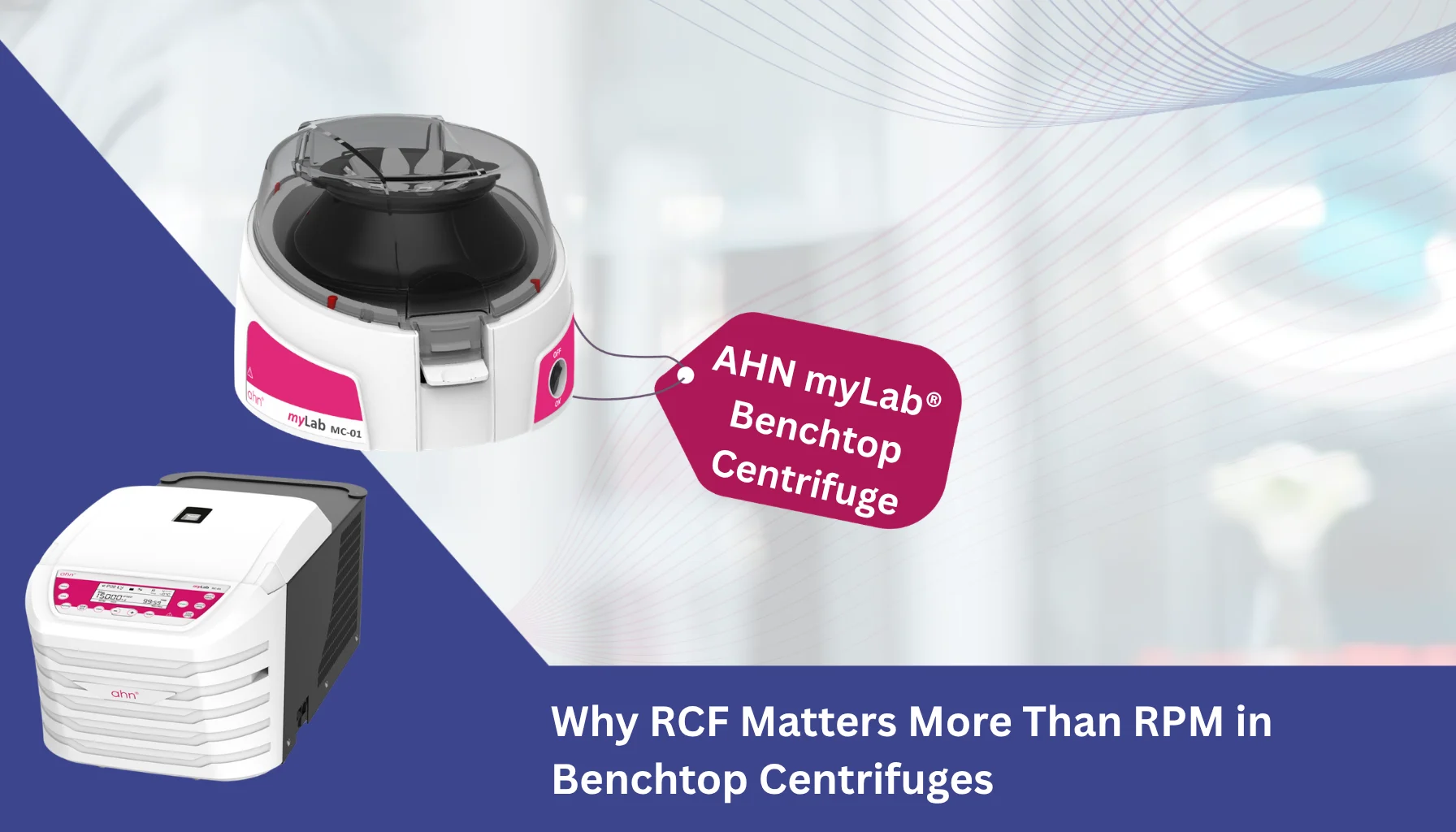
The AHN myLab® Refrigerated Centrifuge 15000 RPM supports clinical applications, including blood centrifugation and PRP preparation. It reaches up to 15,596 ×g while maintaining a compact footprint.
Its close 12-place rotor supports multiple microtube formats, including 0.2 mL, 0.5 mL, 1.5 mL, and 2 mL tubes. For everyday workflows, the AHN myLab® Microcentrifuge 6000 RPM offers compact operation with forces reaching 2000 g. The system includes a brushless DC motor, quiet operation, and PCR rotor compatibility.
Importantly, these features support practical daily workflows instead of simply advertising high RPM values. That distinction matters in real laboratories. Especially when reproducibility determines research quality.
How to Choose the Right Benchtop Centrifuge
Start with your protocol requirements. Not marketing numbers.
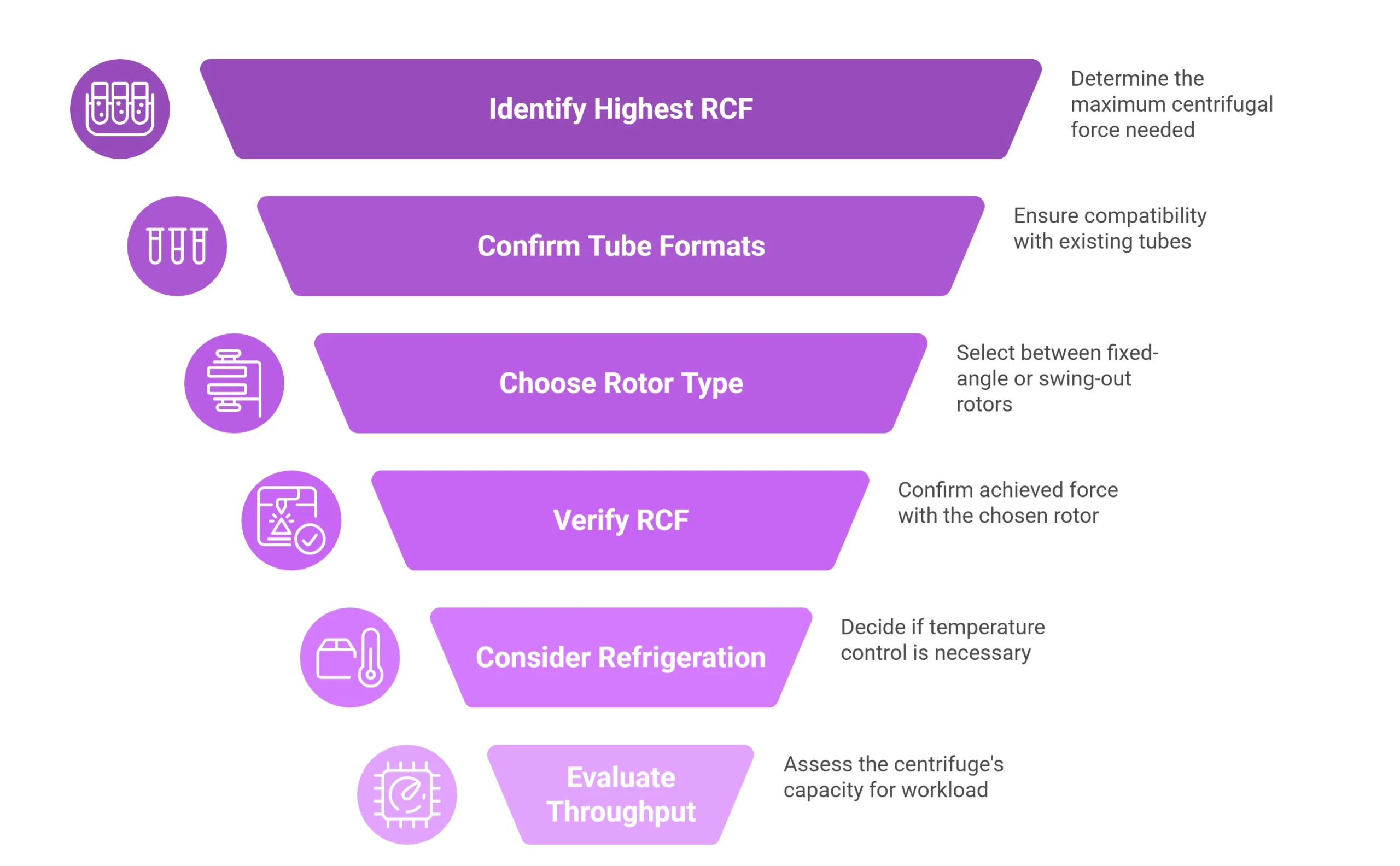
Temperature-sensitive workflows especially benefit from refrigerated systems. Many researchers overlook this until sample stability becomes problematic.
Final Thoughts
RPM tells you how fast a rotor spins. RCF tells you what your sample actually experiences. Only one determines separation quality. The next time you compare a centrifuge, stop chasing RPM alone. Start with the RCF your protocols demand. Then evaluate rotor geometry, tube compatibility, and workflow needs around it. That approach delivers consistent science. Explore centrifuge solutions from AHN Biotechnologie GmbH designed for reliable clinical and research performance.