


You poured the media perfectly, sterilized every tool, incubated at the right temperature, yet the colonies look different. Some are smaller. Some spread unevenly. Some antibiotic zones seem off. The culprit may be hiding in plain sight. It’s not contaminated. Not incubation. Not media composition. Just agar thickness.
Microbial growth is highly sensitive to its environment. Even a one-millimetre difference in agar thickness can change that environment. Nutrients may become more concentrated or diluted.
Oxygen may diffuse differently. Moisture may evaporate faster. Colonies may grow smaller, spread wider, or appear atypical. The organism remains the same, the conditions do not.
And that changes everything, agar thickness is often treated as a minor detail. In reality, it directly influences microbial growth, colony morphology, and experimental accuracy. In microbiology, tiny details create major differences. And in AHN myPlate® Petri Dishes, those details are designed to stay consistent.
Overlooked Layer Beneath Every Result
Every microbiologist trusts Petri dishes as they support bacterial isolation. They reveal fungal morphology enabling antibiotic susceptibility testing. They validate quality control processes but the Petri dish is only part of the system. The agar layer inside it matters just as much. Too thin, and colonies grow under stress. Too thick, and diffusion slows dramatically. Uneven surfaces distort colony patterns.
That is why experienced laboratories treat agar thickness as one of the critical control points.
And why precision-built dishes like AHN myPlate® Petri Dishes help laboratories achieve dependable lab accuracy.
What Exactly Is Agar Thickness?
Agar thickness is the depth of solidified culture media inside Petri dishes. Most microbiology applications use a depth of 3 to 5 mm. For a standard 90 mm Petri dish, this usually requires 20 to 25 mL of media.
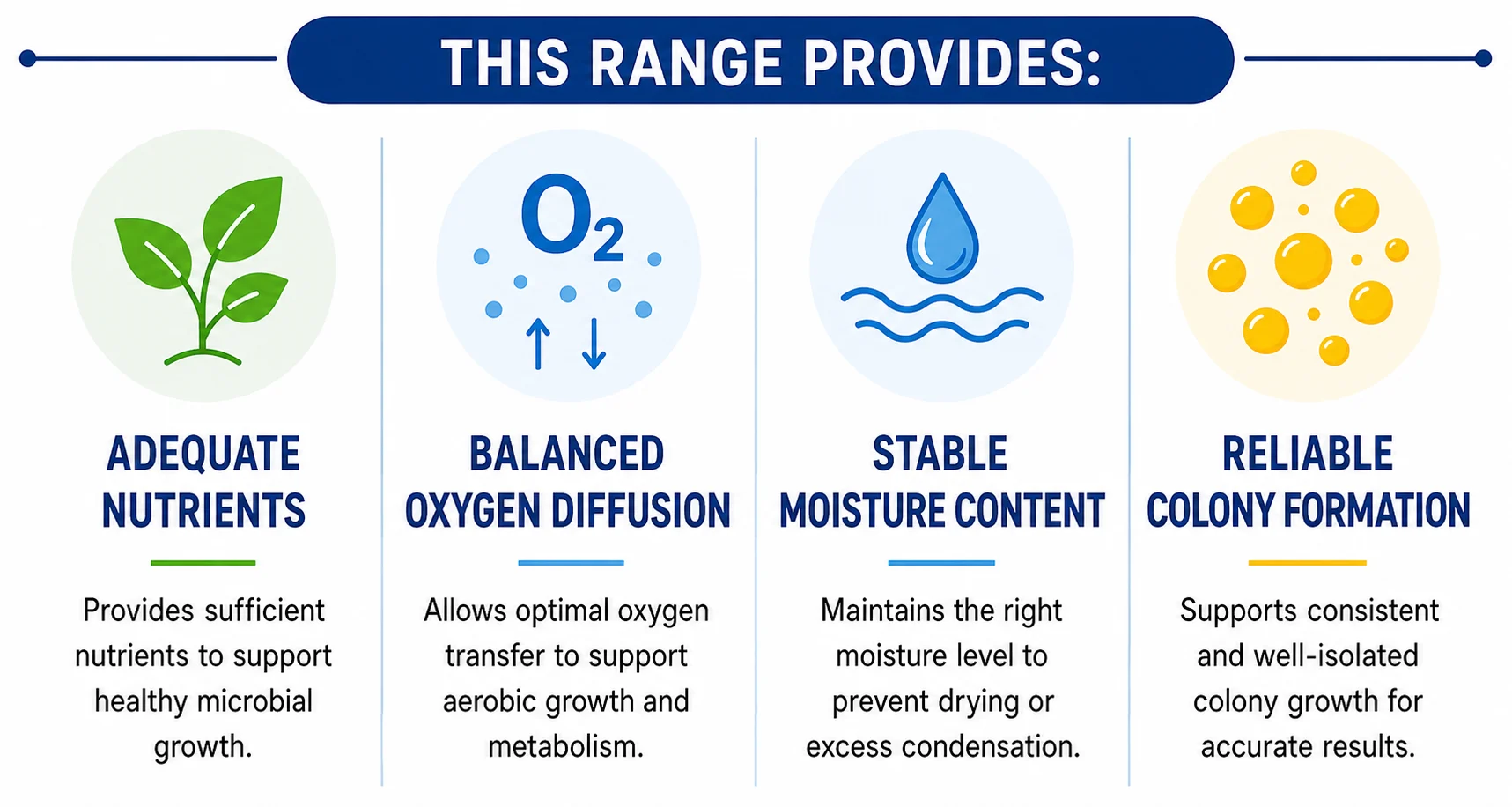
Think of agar as a microbe’s habitat. Too little media creates a dry and stressful environment.
Too much media slows nutrient and antimicrobial diffusion. When thickness remains consistent, microbial growth becomes more predictable.
That consistency begins with dimensionally accurate Petri dishes. AHN myPlate® Petri Dishes are manufactured with highly consistent dimensions, making it easier to maintain standardized agar depth in every batch.
Why Microbes Care About Millimeters
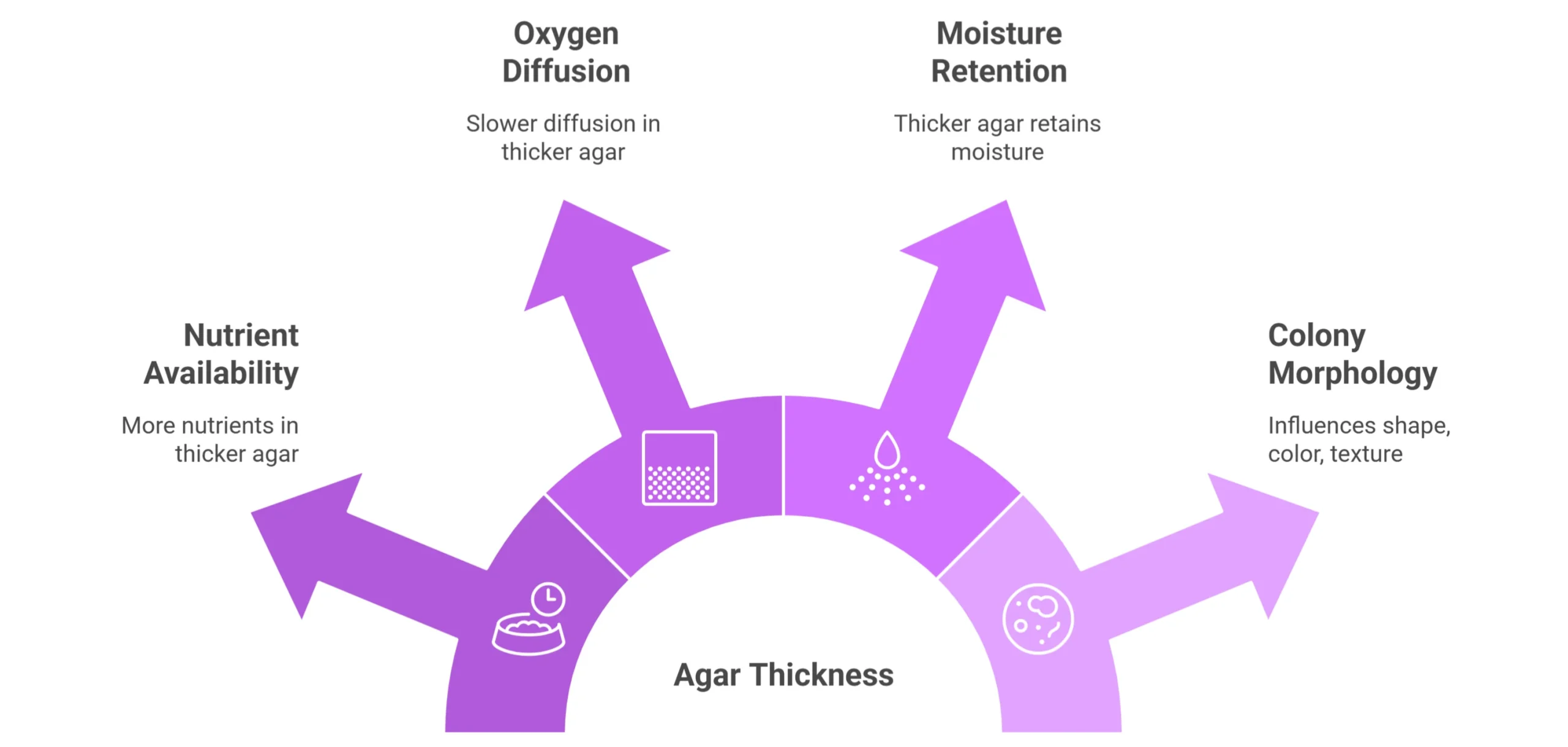
Microorganisms respond to their environment immediately. They do not know your protocol. They only react to what surrounds them. Agar thickness changes the environment in four important ways.
1. Nutrient Availability Changes
A thicker agar layer contains more nutrients, while a thinner layer offers fewer reserves. Fast-growing organisms may exhaust nutrients sooner in shallow plates. This can reduce colony size and alter growth rates. In comparative studies, such differences can mislead interpretation.
2. Oxygen Diffusion Shifts
Oxygen enters the medium from the surface. Agar depth influences how gases diffuse.
Aerobic organisms may behave differently on thicker media. Microaerophilic and facultative organisms can show altered patterns. Vented AHN myPlate® Petri Dishes further improve airflow and moisture control, supporting optimal gas exchange.
3. Moisture Retention Varies
Thin agar dries faster. Dry media causes cracking and inhibits growth. Thicker media retains moisture longer. This is useful for extended incubations. Non-vented AHN myPlate® Petri Dishes help minimize moisture loss when prolonged storage or anaerobic culture is required.
4. Colony Morphology Changes
Microbes express themselves through shape, color, and texture. Agar depth can influence all three. Colonies may spread differently. Pigmentation may appear altered. Hemolysis zones may become harder to interpret.
When optical clarity is poor, these changes become difficult to detect. AHN myPlate® Petri Dishes are exceptionally clear, allowing precise observation from both the top and bottom.
When Thickness Distorts Scientific Results
Agar thickness affects more than appearance. It directly impacts experimental outcomes, making it a true determinant of lab accuracy.
Antibiotic Susceptibility Testing
This is where agar thickness matters most. Antibiotics diffuse through the media after application. Thin agar allows faster diffusion. Zones of inhibition become larger. Thick agar slows diffusion. Zones appear smaller. The same organism may appear falsely sensitive or resistant. For clinical and pharmaceutical laboratories, that risk is unacceptable.
Inconsistent Colony Counts
Microbial enumeration depends on reproducible growth conditions.
Different agar depths create different colony numbers.
This can affect:
- Water testing
- Food microbiology
- Environmental monitoring
- Bioburden assessment
Consistency is essential for trustworthy data.
Poor Reproducibility
Researchers expect experiments to repeat reliably. Variable agar thickness introduces hidden inconsistency. One technician may pour 18 mL. Another may pour 24 mL. Both follow the same protocol. Both obtain different results. Without standardization, comparison becomes difficult.
Common Mistakes Laboratories Make
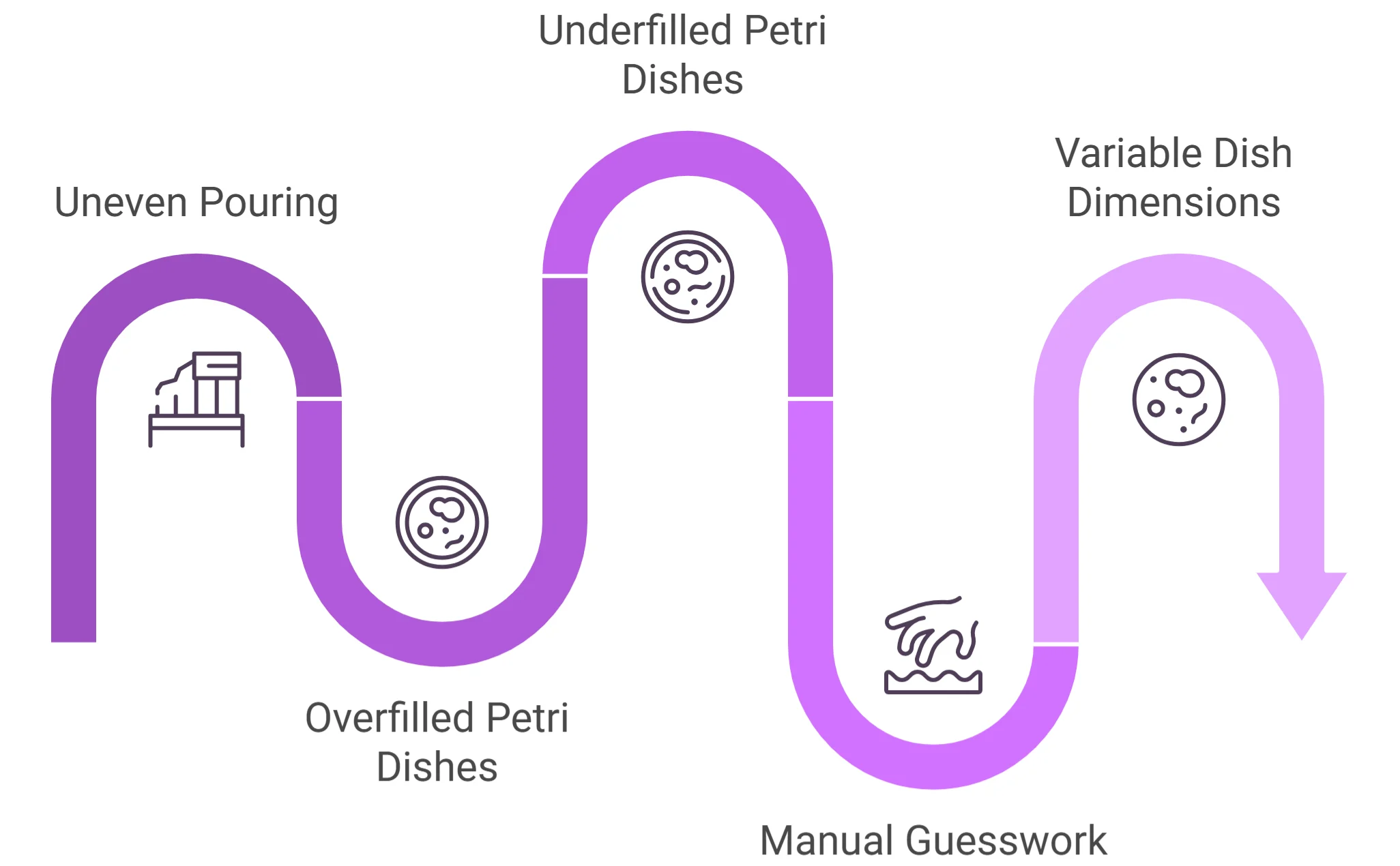
Even experienced teams can overlook agar thickness. The most common issues are surprisingly simple.
Uneven Pouring
Tilted benches create sloped media surfaces.
Overfilled Petri Dishes
Excess volume increases depth and slows diffusion.
Underfilled Petri Dishes
Shallow media dries and stresses microorganisms.
Manual Guesswork
Visual estimation leads to inconsistent culture media preparation.
Variable Dish Dimensions
Low-quality Petri dishes may not provide uniform geometry. Even perfect pouring cannot compensate for an inconsistent dish design.
Best Practices for Optimal Agar Thickness
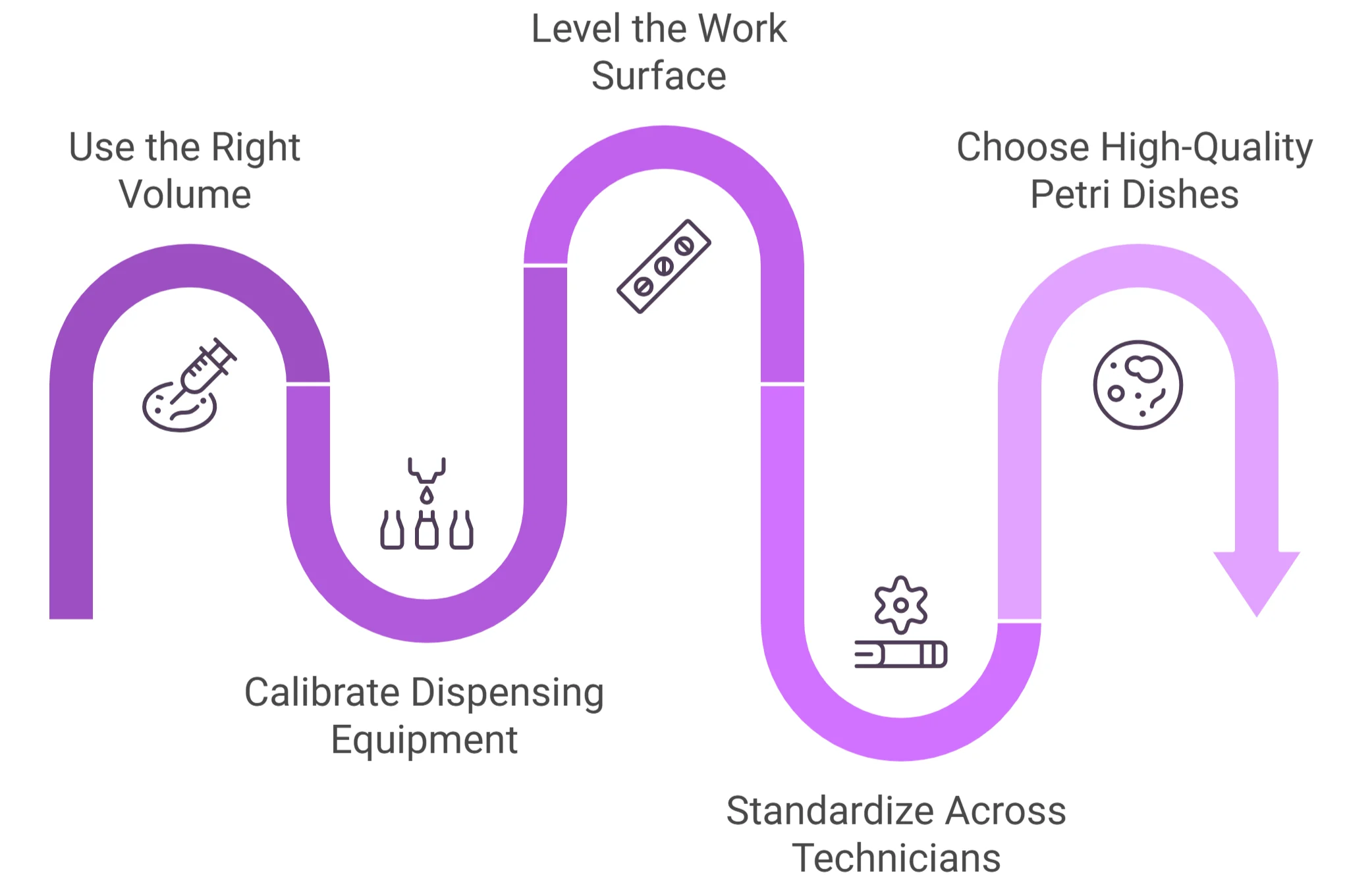
The good news is that agar consistency is easy to control. A few disciplined steps make a major difference.
Use the Right Volume
For 90 mm Petri dishes, dispense 20 to 25 mL.
Use the same volume throughout the batch.
Calibrate Dispensing Equipment
Automated or calibrated dispensers reduce variation.
Precision improves both speed and reproducibility.
Level the Work Surface
Always pour media on a flat, stable bench.
This ensures even solidification.
Standardize Across Technicians
Document the exact volume and method.
Train every operator to follow the same protocol.
Choose High-Quality Petri Dishes
The dish itself must be dimensionally consistent. AHN myPlate® Petri Dishes are manufactured from premium polystyrene in cleanroom facilities. Each batch is traceable by lot number.
Every plate is sterile, pyrogen-free, and endotoxin-free. Their thermal stability promotes even heat distribution during incubation. Their precise dimensions help maintain uniform agar thickness.
Their stackable 90 mm format fits seamlessly into routine workflows. In short, they remove one more source of variability.
The Silent Partner Behind Reliable Microbial Growth
Scientists often focus on organisms, media, and instruments. But consumables shape results just as strongly. Petri dishes are not disposable afterthoughts. They are foundational tools for microbiology.
When dimensions are consistent, agar thickness becomes easier to control. When optical clarity is exceptional, colonies are easier to interpret. When sterility is assured, contamination risks are minimized. That is the philosophy behind AHN myPlate® Petri Dishes.
Final Thoughts: Accuracy Starts from the Bottom Up
Microbiology rewards precision. Sometimes, that precision is measured in millimeters. Agar thickness influences microbial growth, culture media performance, and lab accuracy.
It affects colony morphology, antibiotic testing, and reproducibility. By standardizing both your pouring technique and your Petri dishes, you create more reliable results.
With AHN myPlate® Petri Dishes, every plate is engineered to support uniform agar depth and dependable microbial culture performance. Because in science, consistency is never a small thing.
