




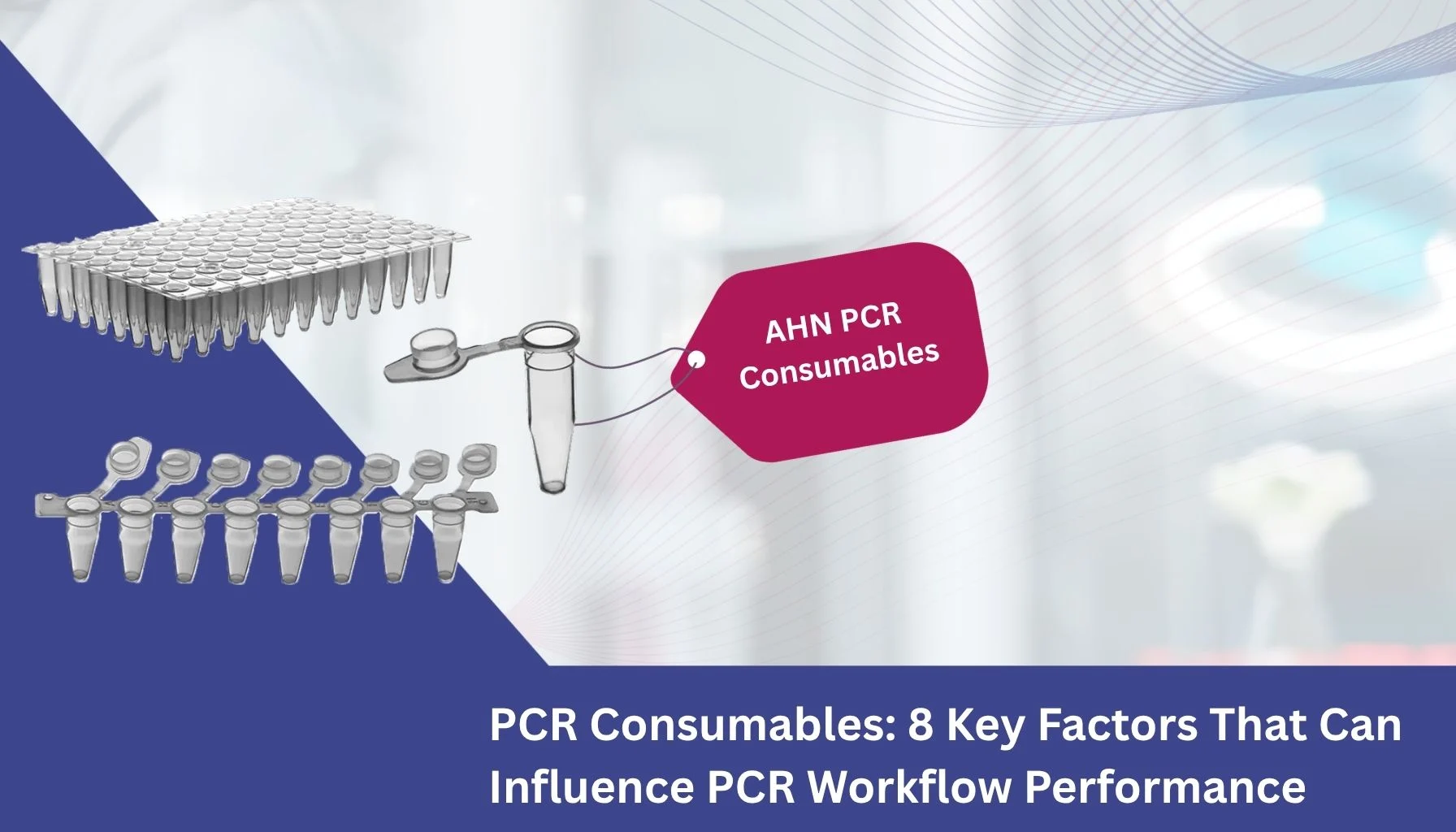
PCR is designed around precision. Yet small variations can still affect the workflow. The thermocycler often receives most of the attention. However, consumables also form part of the reaction environment.
Tubes, strips, plates, and seals interact with samples throughout PCR. Their design can influence thermal transfer, evaporation, optical detection, recovery, and handling. That makes PCR Consumables more than simple containers for reaction mixtures.
Volume and format matter, but they are only the starting point. Laboratories also need to consider material purity, compatibility, sealing, and consistency. So, what should laboratories evaluate when selecting PCR consumables? Here are eight factors worth considering before making that decision.
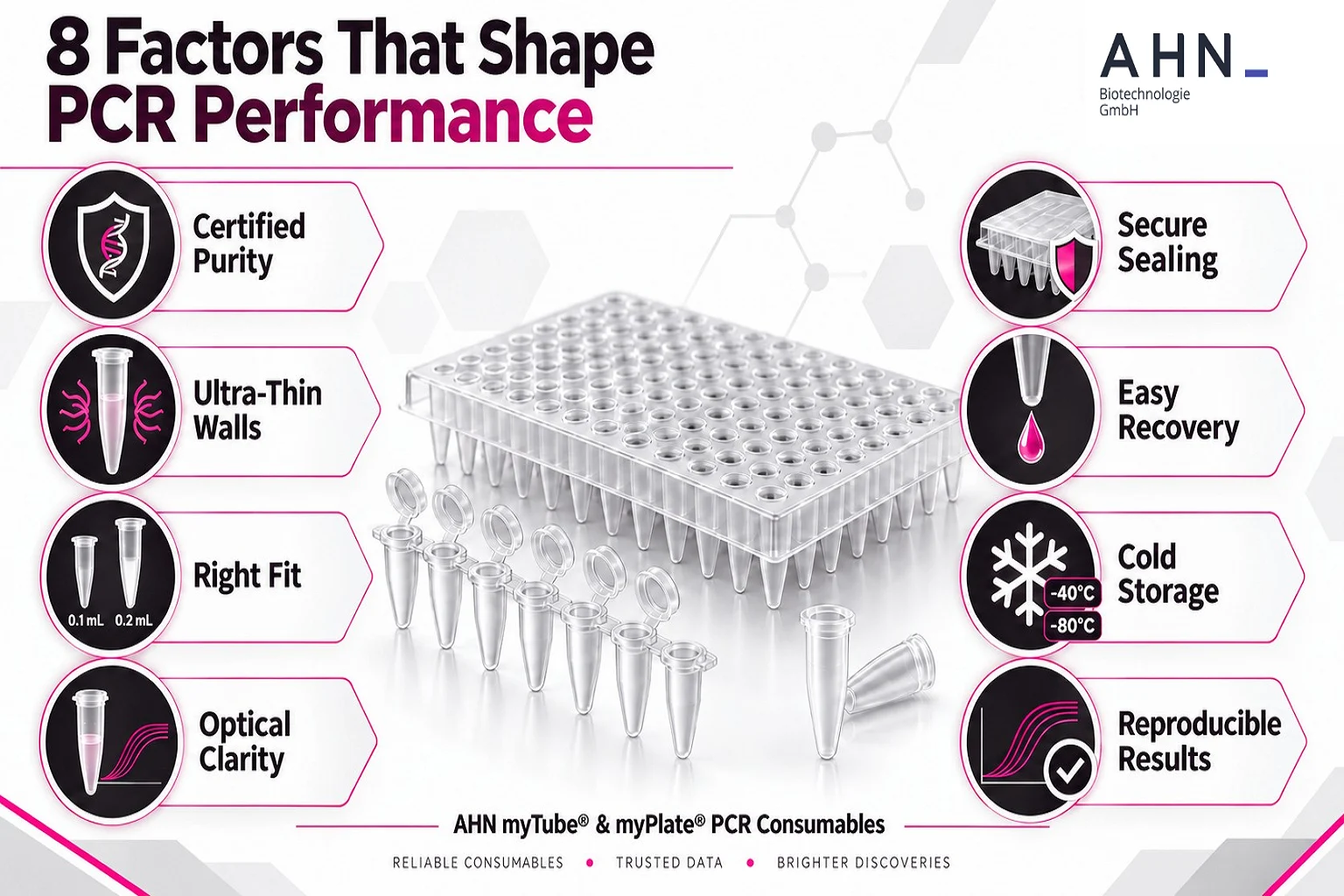
1. Material Purity and Contamination Control
PCR reactions can be highly sensitive to unwanted contaminants. Even the consumable itself must meet appropriate purity requirements. Potential concerns include DNase, RNase, human DNA, and PCR inhibitors. Endotoxins can also matter in applications where their presence is relevant.
That is why purity specifications deserve attention during product selection. AHN PCR consumables are manufactured using high-quality, contamination-free materials. The products feature certified purity specifications across the range.
AHN PCR tubes and strips are free from DNase, RNase, human DNA, PCR inhibitors, and endotoxins. The PCR plates are also specified free from DNase, RNase, human DNA, PCR inhibitors, pyrogens, and ATP. For PCR workflows, contamination control starts before amplification begins.
2. Wall Thickness and Thermal Transfer
Think about the thermal path during PCR. Thermocycler to tube wall to reaction mixture.
The consumable sits directly between the instrument and reaction. Its wall thickness and uniformity therefore become important considerations.
Thicker or inconsistent walls can affect how efficiently heat reaches the reaction. Uniform construction supports consistent thermal transfer during cycling. AHN PCR tubes use an extra-thin, uniform wall design. This supports efficient heat transfer during thermal cycling.
The same design principle extends to AHN PCR strips. For laboratories, the takeaway is simple. Consumable geometry should complement the thermal cycling process.
3. Thermocycler Compatibility and Format
A PCR consumable can be well designed and still be unsuitable. The reason could simply be the wrong profile or format. Reaction volume is one important consideration. So is the thermocycler’s tube or plate requirement.
For example, AHN PCR strips are available in two formats.
0.1 mL strips are particularly recommended for fast thermocyclers. They use low-profile tubes suited to those systems.
0.2 mL strips are designed for standard thermocyclers. They use regular-profile tubes for those workflows.
AHN PCR plates are also available in low and regular profiles. Multiple skirt configurations provide further format flexibility. Before choosing PCR Consumables, always check instrument compatibility.
4. Optical Properties for qPCR
PCR and qPCR have different consumable considerations. Traditional PCR primarily focuses on amplification. qPCR also requires optical detection of reaction signals.
That makes transparency and optical performance particularly important. AHN PCR tubes provide high transparency for optical measurement. They support applications where qPCR signals are read through the tube bottom.
AHN PCR strips also feature optical options. Their ultra-clear caps support optical reading through the cap.
PCR plate colour can also influence how signals are viewed. AHN offers white PCR plates to improve signal contrast and visibility. Frosted plates are designed to increase qPCR signal-to-noise ratios. So, optical requirements should always match the detection method.
5. Sealing and Evaporation Control
During thermal cycling, reaction mixtures repeatedly experience temperature changes. A poor seal can allow evaporation during this process. That can alter reaction volume and potentially affect reproducibility.
This makes sealing an important part of PCR consumable selection. AHN PCR plates feature raised well rims. These support secure sealing with compatible disposable adhesive seals.
AHN PCR membranes are designed for PCR, qPCR, and sample storage. Their specified evaporation rate is below 5%.
The membranes also offer ultra-clear options for optical applications. For laboratories, the lesson is straightforward. The reaction does not stop needing protection during cycling.
6. Sample Recovery and Ergonomic Handling
Small reaction volumes can create a familiar laboratory frustration. A small amount of liquid remains difficult to recover. Tube geometry can make a noticeable difference here. AHN PCR tubes feature a V-shaped bottom. This design supports easier sample recovery. Handling matters too, especially during repetitive laboratory workflows.
The tubes feature an ergonomic flat cap design. This allows opening and closing with one hand. Small design decisions can make repetitive laboratory workflows easier. That is why usability deserves consideration alongside technical specifications.
7. Storage and Temperature Compatibility
PCR consumables can remain relevant after amplification is complete.
Some samples may require temporary cold storage. Others may require ultra-low-temperature storage for longer periods. The sealing solution therefore needs to match the intended storage temperature.
AHN provides PCR sealing solutions suitable for cold storage down to -40°C. For ultra-low-temperature storage around -80°C, AHN recommends aluminium sealing foil. This foil is specifically designed to maintain seal integrity under extremely cold conditions. Choosing the right sealing solution helps align storage requirements with consumable performance.
8. Batch Consistency and Quality Control
A PCR consumable should not only perform well once. Laboratories also need confidence in consistent manufacturing across their workflows. Purity matters. Dimensions matter. Wall uniformity matters. Sealing performance matters too. That makes quality control an important consideration when evaluating a PCR consumables manufacturer.
AHN PCR consumables undergo strict quality control procedures. The range is designed for consistent and reproducible performance. The products also feature certified purity specifications and sterile handling.
Several products are manufactured for sterile laboratory use. Selected PCR products are also autoclavable at 121°C for 15 minutes. Consistency therefore becomes part of the product, rather than an afterthought.
Choosing the Right PCR Consumables for Your Workflow
Before selecting PCR consumables, consider the complete workflow. What thermocycler are you using? Check whether it requires low-profile or standard-profile formats.
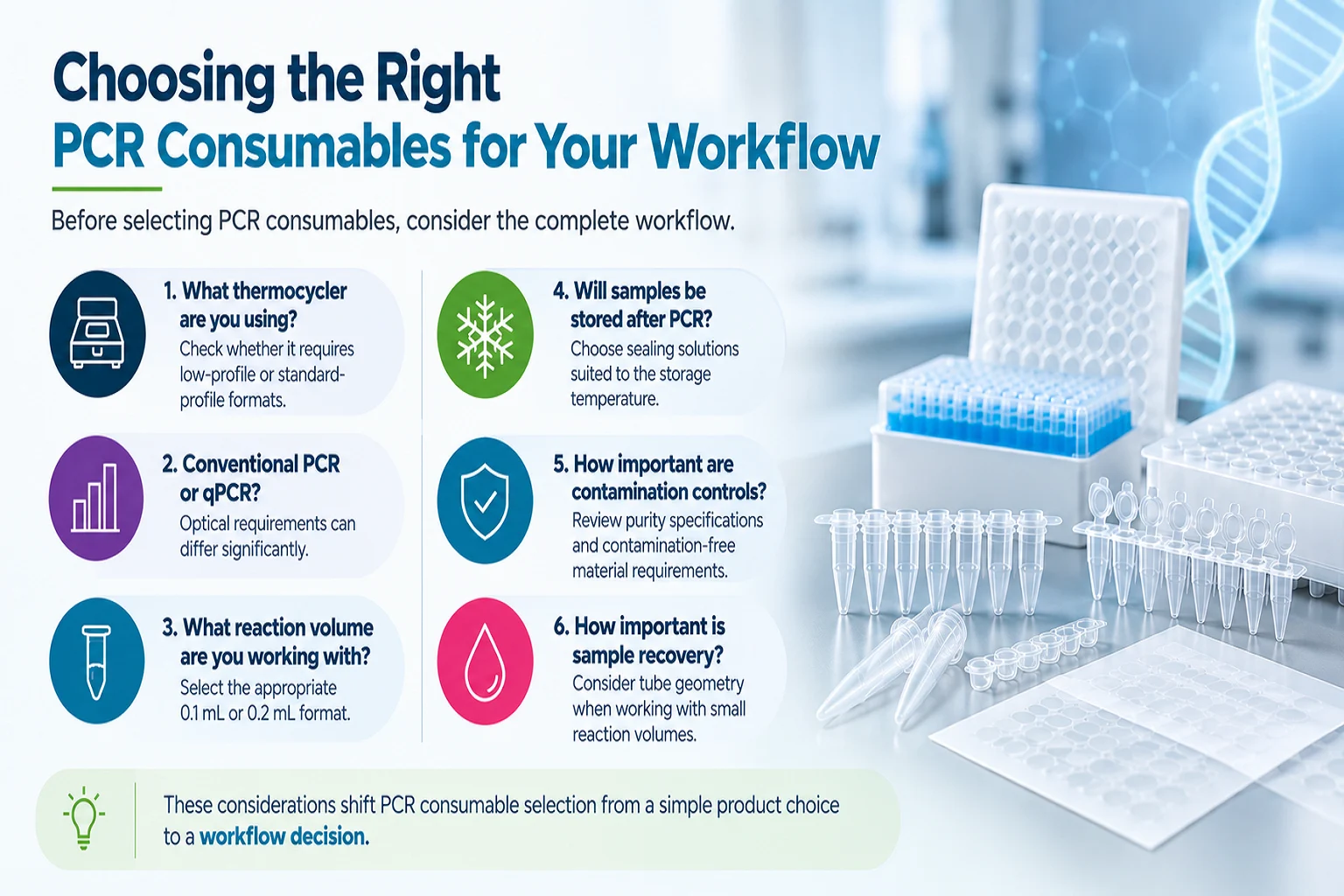
These considerations shift PCR consumable selection from a simple product choice to a workflow decision.
What Makes AHN PCR Consumables Stand Out?
The strongest PCR consumable is not defined by one feature. It is the combination of several practical design decisions.
AHN brings together six notable performance-focused strengths across its PCR consumables portfolio:
1. Thin, Uniform Tube Walls
AHN PCR tubes and strips feature extra-thin, uniform walls. This supports efficient heat transfer during thermal cycling.
2. Certified Purity
The range includes products specified free from key contaminants. These include DNase, RNase, human DNA, PCR inhibitors, and other specified contaminants.
3. Multiple Format Options
AHN provides 0.1 mL and 0.2 mL PCR strips. PCR plates also come in different profiles and skirt configurations.
4. Dedicated Optical Options
Transparent tubes, ultra-clear caps, white plates, and frosted plates address different optical requirements for PCR and qPCR workflows.
5. Designed for Sample Protection
Raised well rims support secure plate sealing. PCR membranes offer an evaporation rate below 5%, while specific seals support cold storage.
6. Practical Laboratory Handling
V-shaped tube bottoms support easier sample recovery. Ergonomic flat caps also allow convenient one-handed opening and closing.
Together, these features show a broader approach to PCR consumable design.
AHN is not simply providing tubes, strips, plates, and seals. The portfolio addresses different stages of the PCR workflow.
PCR Consumables Designed Around the Complete Workflow
From contamination control and thermal transfer to optical detection, AHN’s range addresses practical PCR requirements.
Tubes and Strips
- 0.1 mL and 0.2 mL formats
- Low-profile and standard-profile options
- Thin, uniform walls
- V-shaped bottoms
- Optical measurement options
PCR Plates
- Low and regular profiles
- Non-skirted to fully skirted options
- Alphanumeric coding
- Raised well rims
- White and frosted options
Sealing Solutions
- PCR and qPCR membranes
- Cold-storage solutions down to -40°C
- Aluminium sealing foil for around -80°C storage
- Ultra-clear options for optical applications
This portfolio gives laboratories more than format flexibility. It provides options aligned with different PCR workflow requirements.
Better PCR Workflows Begin With the Right Consumables
PCR consumables are not passive components of the workflow. Their material quality, thermal properties, optical performance, sealing, compatibility, and consistency can all influence laboratory workflows.
The right choice therefore begins with understanding the complete application. AHN Biotechnologie brings these considerations together across its PCR tubes, strips, plates, and sealing solutions.
The portfolio combines practical design features with certified purity, multiple formats, optical options, and storage-focused sealing solutions.
For laboratories, that means evaluating consumables as part of the complete PCR process.
Explore the AHN Biotechnologie offers PCR Consumables range to find formats and sealing solutions suited to your workflow.
Frequently Asked Questions
1. Why does wall thickness matter in PCR tubes?
Wall thickness affects the thermal path between the thermocycler and reaction. AHN uses extra-thin, uniform walls to support efficient thermal transfer during cycling.
2. Should I choose 0.1 mL or 0.2 mL PCR strips?
The choice depends on your thermocycler format. AHN recommends 0.1 mL strips particularly for fast, low-profile thermocyclers. The 0.2 mL format suits standard thermocyclers.
3. Why are white and frosted PCR plates used for qPCR?
qPCR requires optical detection of reaction signals. AHN white plates improve signal contrast and visibility. Frosted plates are designed to increase qPCR signal-to-noise ratios.
4. Which AHN sealing solution is suitable for -80°C storage?
AHN recommends aluminium sealing foil for storage around -80°C. PCR sealing solutions are suitable for cold storage down to -40°C.
5. What contamination controls are specified for AHN PCR consumables?
AHN PCR tubes and strips are specified free from DNase, RNase, human DNA, PCR inhibitors, and endotoxins. PCR plates are specified to be free from several additional contaminants, including pyrogens and ATP.
Also Read: Tips for Choosing the Right PCR Consumables


