




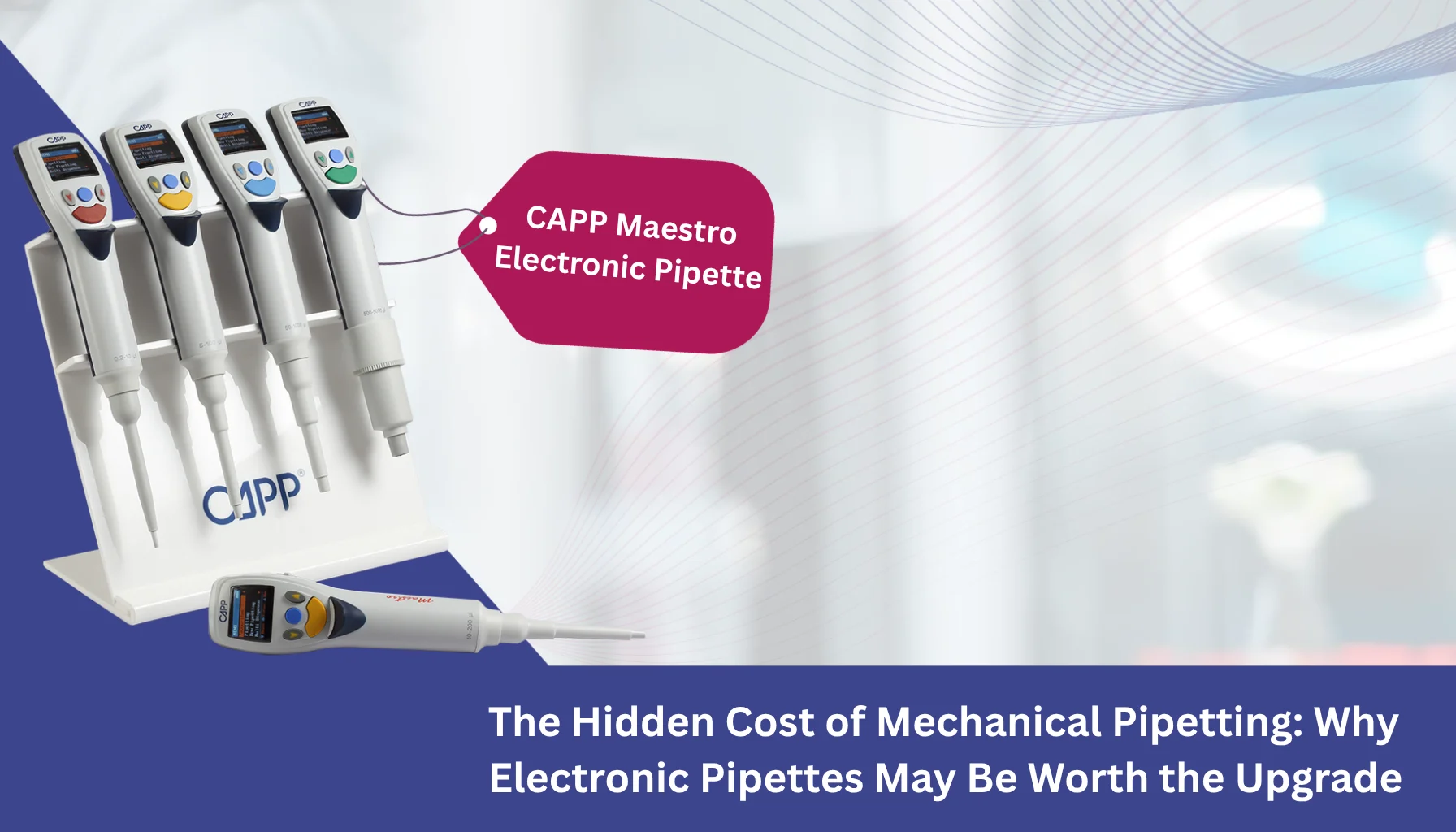
In laboratories, pipetting is one of the most frequently performed tasks. From transferring reagents and preparing samples to serial dilutions and cell culture workflows, accurate liquid handling is essential to reliable results. Yet, despite its importance, pipetting is often treated as a routine task rather than a factor that can significantly influence laboratory efficiency.
Mechanical pipettes have been a trusted laboratory tool for decades. They are simple, familiar, and effective for many applications. However, when pipetting becomes highly repetitive or involves large numbers of samples, the limitations of Mechanical operation can become increasingly noticeable.
This is where an electronic pipette can offer a valuable alternative.
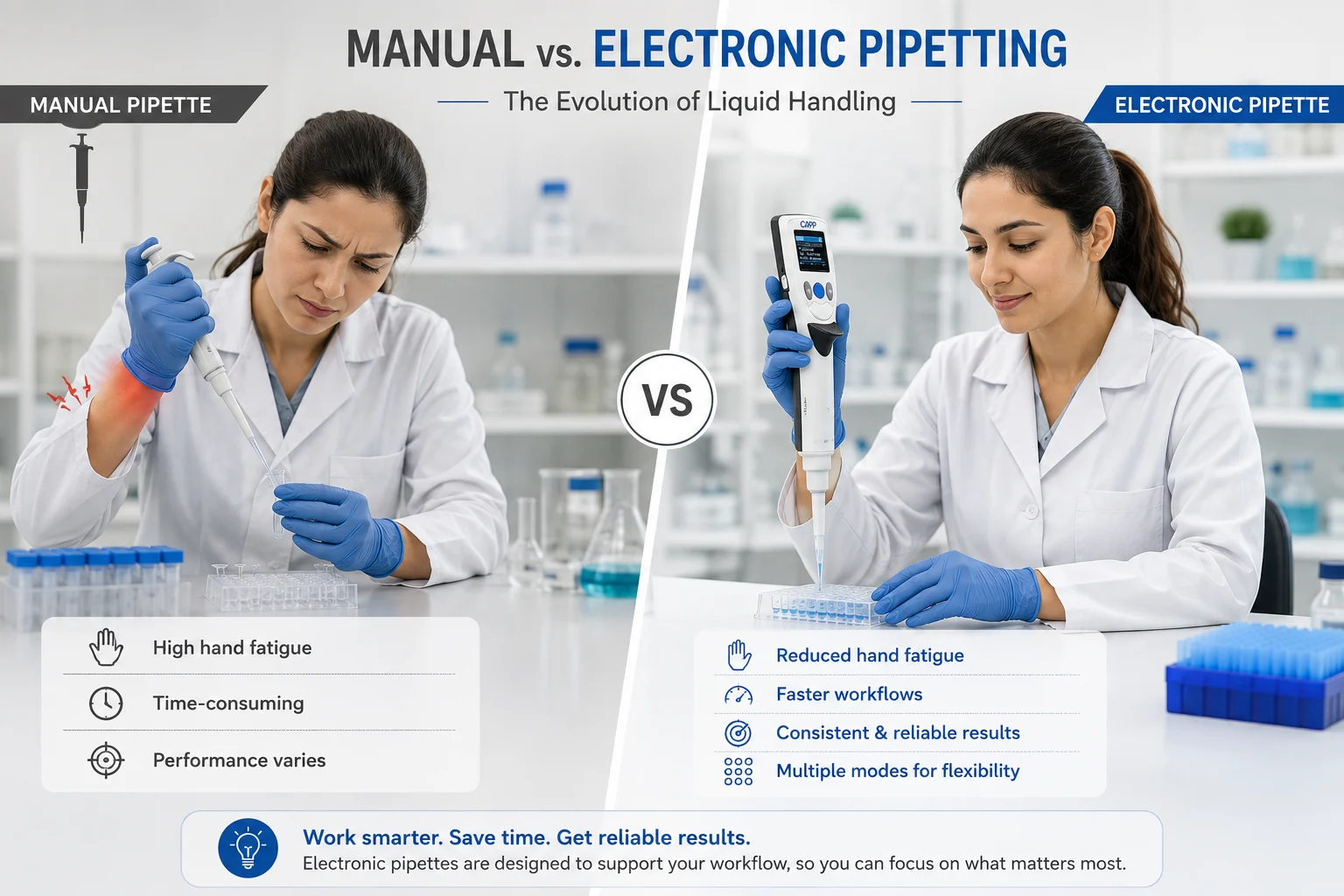
The Hidden Cost of Mechanical Pipetting
The purchase price of a pipette is only one part of its overall cost. The time, physical effort, and potential variability associated with repetitive pipetting can also affect laboratory productivity.
With a Mechanical pipette, every aspiration and dispensing action depends on the user’s hand movement. During extended workflows, hundreds or even thousands of repetitive strokes can place considerable demand on the user’s hand and thumb.
Over time, this can contribute to:
- Hand and thumb fatigue
- Slower pipetting during long workflows
- Inconsistent pipetting technique
- Reduced concentration during repetitive tasks
- Greater dependence on individual operator technique
For laboratories handling high sample volumes, these factors can add up. What appears to be a small amount of effort per transfer can become a significant workload over an entire experiment.
How Does an Electronic Pipette Work?
An electronic pipette uses a motor-driven mechanism to assist with liquid aspiration and dispensing. Instead of Mechanically controlling the piston for every movement, the user selects the desired operating mode and volume, then activates the pipette using its electronic controls.
Depending on the model, electronic pipettes can offer functions such as:
- Programmable aspiration and dispensing
- Repetitive dispensing
- Mixing modes
- Adjustable pipetting speeds
- Serial dispensing
- Multiple operating programs
This can simplify repetitive liquid-handling procedures and reduce the amount of physical effort required from the operator.
Electronic Pipette vs. Mechanical Pipette: What’s the Difference?
The fundamental purpose of both pipette types is the same: accurately transfer liquids. The major difference lies in how the pipetting action is controlled.
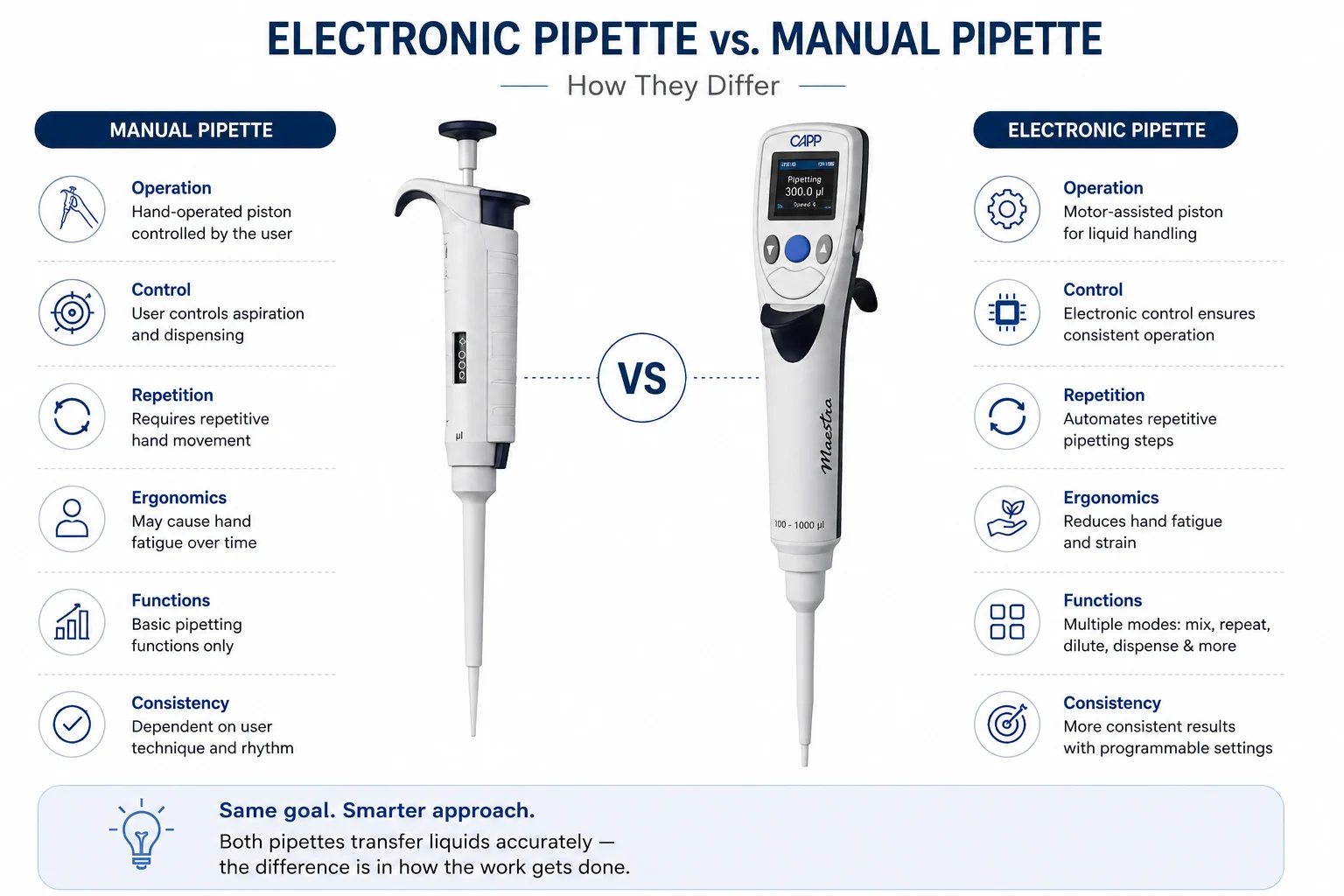
A Mechanical pipette relies primarily on the user’s hand to control piston movement. An electronic pipette uses a motorized system to automate much of that movement.
This distinction becomes particularly important in repetitive applications.
For example, transferring a small volume across dozens of tubes may be straightforward with a Mechanical pipette. But repeating the same operation across hundreds of wells can become physically demanding. An electronic pipette can help streamline these repetitive steps while allowing the operator to maintain greater focus on the overall workflow.
1. Reduce Pipetting Fatigue
One of the most important advantages of an electronic pipette is ergonomics.
Because the motor assists with piston movement, the operator does not need to repeatedly apply the same mechanical force required with a Mechanical pipette. This can make long pipetting sessions more comfortable.
For laboratories where users routinely perform repetitive transfers, reducing physical strain can make a meaningful difference to the working experience.
2. Improve Workflow Efficiency
Time is another hidden cost of Mechanical pipetting.
Electronic pipettes can include programmable modes designed for repetitive operations. Instead of Mechanically repeating the complete aspiration-and-dispense sequence for every transfer, the user can select an appropriate program and perform multiple transfers more efficiently.
This can be particularly useful for:
- Microplate preparation
- Serial dispensing
- Sample aliquoting
- Reagent distribution
- Cell culture workflows
- Repetitive dilution procedures
The result is not simply faster pipetting—it can be a smoother overall workflow.
3. Support Greater Consistency
Pipetting results depend on more than the pipette itself. User technique, speed, rhythm, and fatigue can all influence liquid handling.
An electronic pipette can standardize certain aspects of the pipetting process by controlling parameters such as piston movement and operating speed. This can reduce variation caused by differences in Mechanical operation and help create a more consistent workflow between transfers.
However, electronic operation does not eliminate the need for proper pipetting technique. Correct tip selection, liquid handling practices, calibration, and appropriate operating procedures remain essential.
4. Make Repetitive Tasks Easier
Not every laboratory task requires an electronic pipette. For occasional transfers or simple applications, a Mechanical pipette may be perfectly suitable.
The value of an electronic pipette becomes more apparent when repetition increases.
If a workflow involves performing the same pipetting action again and again, automation of the mechanical movement can reduce unnecessary effort. Instead of spending attention on repeatedly operating the piston, users can focus more on sample handling and experimental accuracy.
Is an Electronic Pipette Worth the Upgrade?
The answer depends on the laboratory’s workflow.
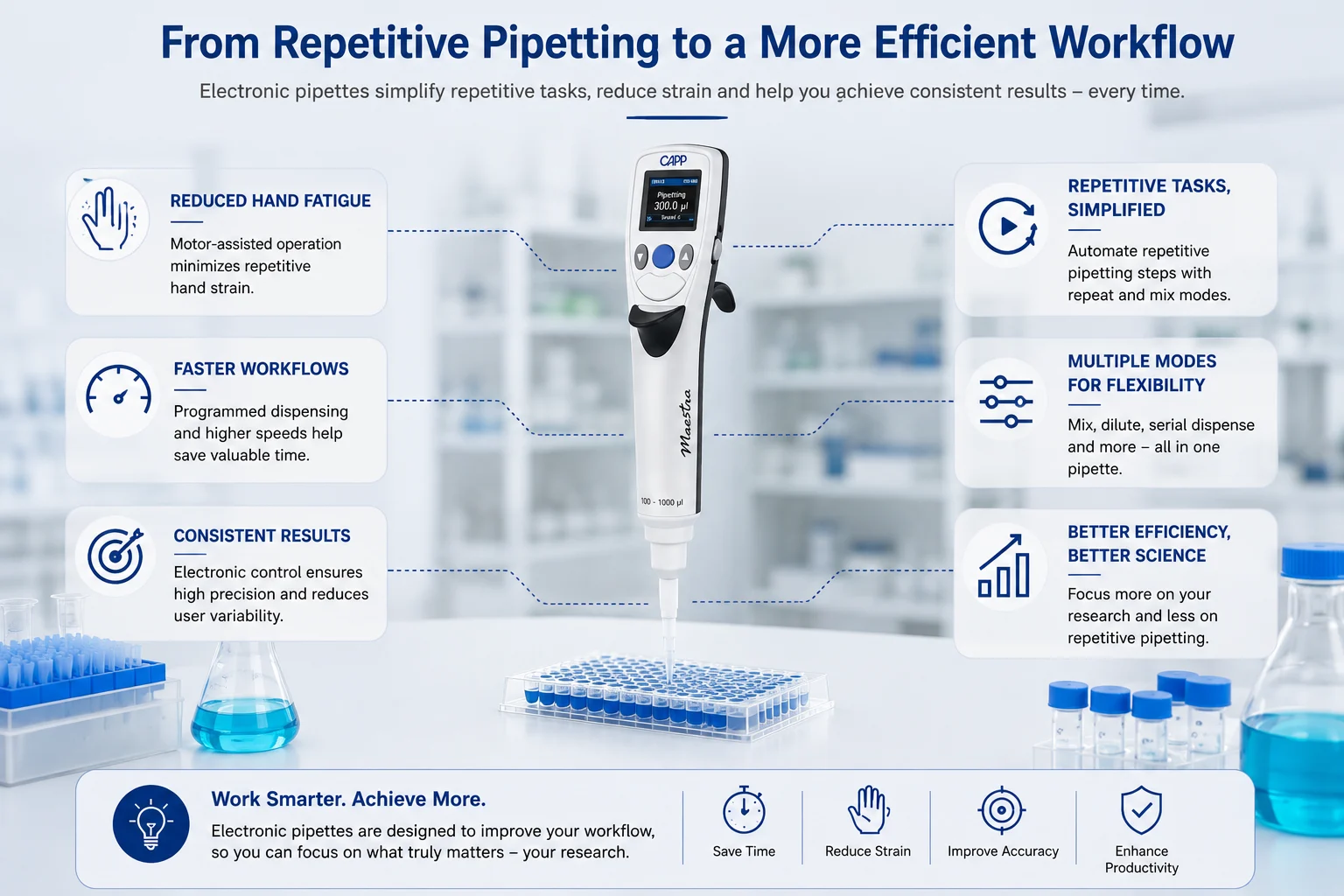
For low-volume, occasional pipetting, a Mechanical pipette may continue to be a practical choice. But for laboratories performing frequent, repetitive, or high-throughput liquid handling, an electronic pipette can provide advantages in ergonomics, workflow efficiency, programmability, and consistency.
The decision should therefore go beyond comparing the purchase price of two pipettes.
A better question is:
How much time, effort, and repetitive work can the right pipetting technology save over its lifetime?
When viewed from this perspective, an electronic pipette can represent more than a laboratory equipment upgrade. It can be an investment in a more efficient and comfortable liquid-handling workflow.
Conclusion
Mechanical pipettes remain an important part of laboratory workflows, but they are not necessarily the best solution for every application. As laboratories handle increasing sample volumes and increasingly repetitive protocols, the demands placed on users also increase.
An electronic pipette addresses several of these challenges by combining motorized operation with programmable functions and ergonomic advantages. By reducing repetitive hand effort and streamlining common liquid-handling tasks, it can help laboratories work more efficiently without compromising the importance of precision and proper technique.
The real cost of Mechanical pipetting is not always visible on a purchase order. Sometimes, it is measured in repetitive movements, operator fatigue, workflow time, and lost efficiency.
And that is exactly why, for the right laboratory workflow, upgrading to an electronic pipette may be worth it.
Also Read: The Ultimate Guide to Choosing an Ergonomic Pipette for Your Lab


