



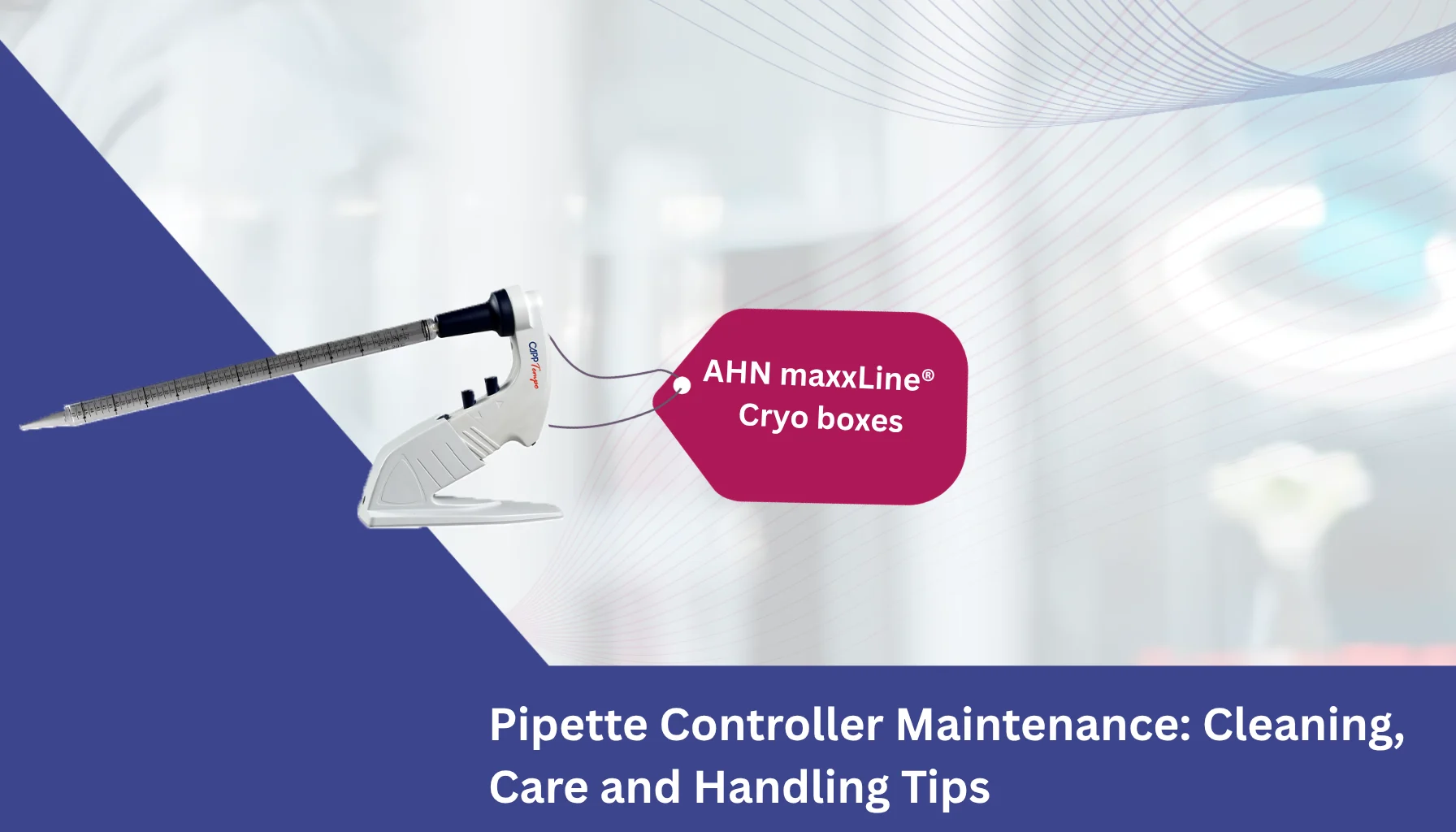
In a busy laboratory, every pipetting step demands control. That makes reliable equipment an important part of daily work. Small maintenance gaps can become bigger workflow problems. Your pipette controller deserves more than occasional cleaning.
AHN Biotechnologie brings that focus to liquid handling. Its CAPP Tempo Motorized Pipette Controller combines speed and precision. It also gives users greater control during volume adjustments.
But even advanced equipment needs the right maintenance routine. Cleaning, handling, storage, and charging all influence performance. So, what should you do between pipetting tasks? And how can simple care keep your controller ready? Let’s look at the maintenance habits that matter most.
Start With the Part That Meets Your Pipette
The nose cone and silicone pipette holder need regular attention. These components directly support the pipette during liquid handling. Begin by removing the nose cone carefully. Then remove the silicone pipette holder and membrane filter.
The holder and valve can be rinsed using a wash bottle. After rinsing, remove excess liquid and allow complete drying. The CAPP Tempo manual recommends replacing the membrane filter during servicing. It also specifies a hydrophobic 0.2 µm filter.
Once everything is dry, reassemble the components correctly. Then perform a leak test before returning to work. That final check should never become an afterthought.
Cleaning Does Not Mean Soaking
Your pipette controller needs cleaning, but electronics need protection. CAPP Tempo can be cleaned with laboratory disinfectants. Ethanol is specifically listed among suitable examples. However, the complete instrument must never be submerged.
Why does that matter?
The controller contains electronic components and a micro pump. Liquid exposure can damage these internal components. A better approach is simple. Clean the appropriate external surfaces carefully.
Keep liquid away from the electronic housing. Remove and clean the designated pipette holder components separately. Good cleaning protects both hygiene and equipment performance.
Give the Pipette Holder a Proper Reset
A clean holder supports more consistent pipetting operation. The CAPP Tempo holder can be rinsed with a wash bottle. The holder valve should be cleaned during this process. Afterward, blow out remaining liquid carefully. Most importantly, allow the components to dry completely.
The manual also allows specific components to be autoclaved. The nose cone can be autoclaved at 121°C. The silicone pipette holder can be autoclaved with it. Always follow the manufacturer’s procedure for reassembly.
Do Not Treat the Filter Like a Permanent Component
Filters have a specific job in liquid handling. Overlooking them can affect the condition of internal components. The CAPP Tempo uses a hydrophobic 0.2 µm membrane filter. During filter replacement, orientation also matters. The thicker side should face the outlet connector.
After replacement, reassemble the controller carefully. Then complete a leak test before further use. This simple sequence helps keep maintenance controlled and repeatable.
Your Charging Routine Matters Too
A powerful pipette controller is only useful when ready. CAPP Tempo provides up to eight hours of continuous operation. Its battery indicator keeps the remaining charge visible. The display also signals when battery power becomes low.
The user guide recommends charging at one battery bar. It recommends using the supplied compatible charger. A full charge takes approximately four hours. There is another useful advantage here.
CAPP Tempo can charge while the pipette remains in use. That helps reduce interruptions during demanding laboratory workflows.
Match Your Speed to the Task
Maintenance is not only about cleaning. How you operate the controller also affects your workflow. CAPP Tempo offers six aspiration speed settings. Aspiration and dispensing have separate speed controls.
For smaller pipettes, lower speeds can be preferable. The manual recommends lower speeds for pipettes up to 5 mL. This gives users greater control during liquid handling. Then comes one of CAPP Tempo’s standout features.
Use the Electronic Brake System
The Electronic Brake System, or EBS, changes the usual approach. Start aspiration or dispensing at your chosen speed. Then activate EBS as you approach the target volume. The system immediately reduces the operating speed. This gives you more control during the final adjustment. Press EBS again to return to the selected speed. It is a useful balance between speed and precision.
Handle Glass Pipettes With Care
Glass pipettes require deliberate handling during insertion. The CAPP Tempo manual specifically highlights this precaution. Avoid forcing the pipette into the holder. Insert it carefully into the nose cone and holder. Good handling protects the pipette and controller together. It also reduces unnecessary stress on the holder assembly.
Store It Like Laboratory Equipment
Storage is easy to overlook, but it matters more than most people think. Keep your controller somewhere clean and sensible. If it came with a wall holder or charging stand, use it. That’s what they’re there for, and it keeps the instrument within easy reach without leaving it out in the open.
Try to keep it away from heat and liquids. The CAPP Tempo can be stored at temperatures from -20°C to +50°C, and its battery needs protection from excessive heat as well.
A Better Maintenance Routine Is Easier Than You Think
A practical maintenance routine can follow four checkpoints:
After use:
Clean external surfaces carefully and remove contamination.
During servicing:
Clean the holder and inspect the membrane filter.
Before operation:
Check the pipette fit and perform a leak test after servicing.
During regular use:
Monitor battery status and choose appropriate speeds.
This approach keeps maintenance connected to daily workflow. It also makes equipment care easier to repeat consistently.
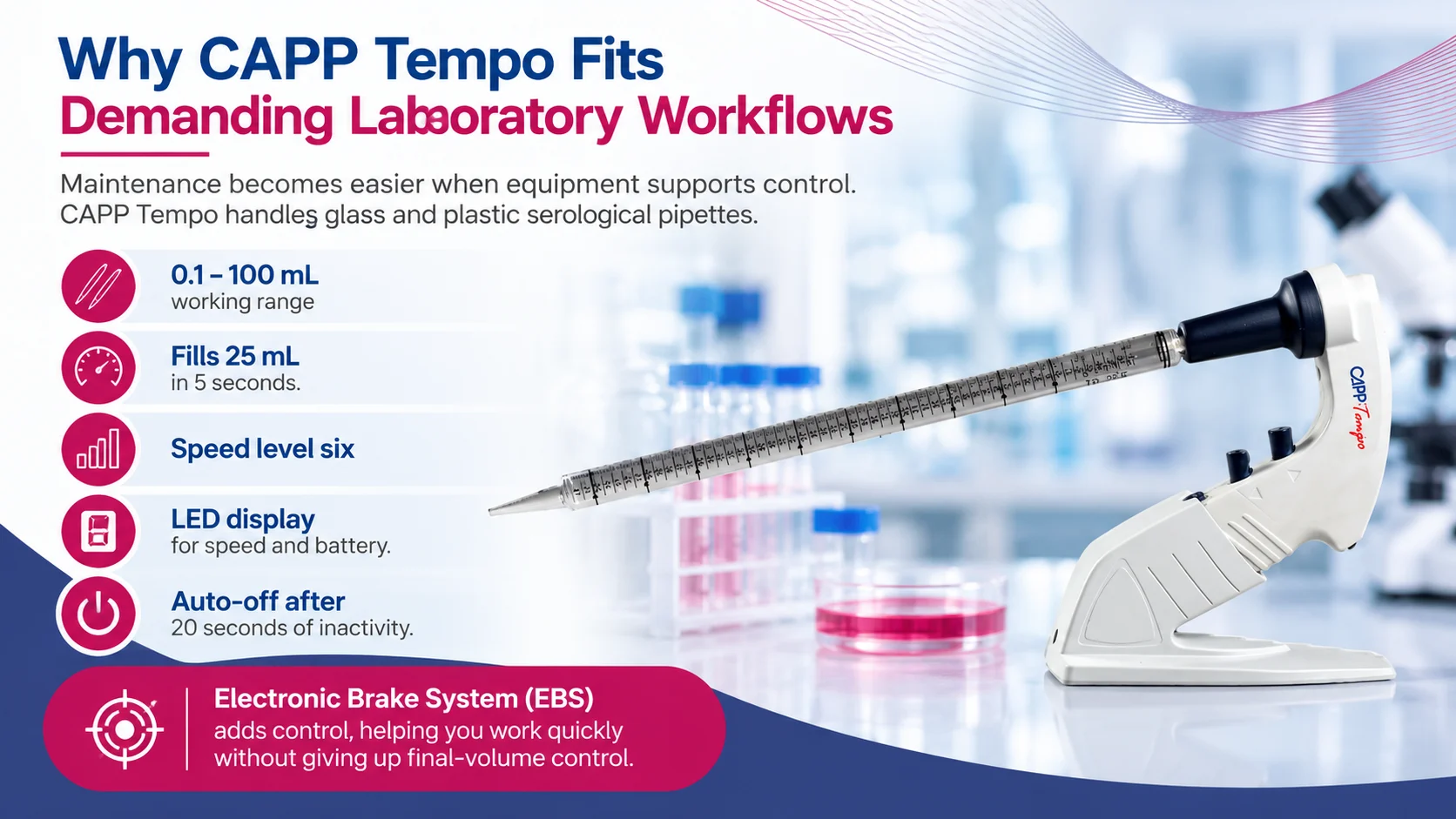
Why CAPP Tempo Fits Demanding Laboratory Workflows
Maintenance becomes easier when the equipment itself supports control. CAPP Tempo handles glass and plastic serological pipettes.
- Its working range covers pipettes from 0.1 to 100 mL.
- Its powerful motor can fill 25 mL in five seconds.
- That performance is available at speed level six.
- The LED display shows speed and battery information.
- It also turns off after 20 seconds of inactivity.
This helps conserve battery power during pauses. Most importantly, EBS adds another layer of control. You can work quickly without giving up final-volume control. That makes CAPP Tempo more than a motorised pipette controller. It becomes a practical part of the liquid-handling workflow.
Keep Your Pipette Controller Ready for the Next Task
Reliable liquid handling depends on more than precision equipment. It depends on how that equipment gets maintained. Clean the right components. Protect the electronics from liquids. Replace filters correctly. Monitor battery condition. Handle pipettes carefully. Use speed settings according to the application.
These habits can keep your workflow predictable and controlled. With its ergonomic design, adjustable speeds, EBS, and battery monitoring, CAPP Tempo supports that approach.
For laboratories seeking controlled and efficient liquid handling, AHN Biotechnologie offers CAPP Tempo as a practical pipette controller solution. It brings speed, precision, and usability together in one instrument.
FAQs
1. How often should a pipette controller filter be replaced?
Replace the filter when maintenance or contamination requires it. Always inspect the filter during regular servicing procedures. CAPP Tempo uses a hydrophobic 0.2 µm membrane filter.
2. Can the CAPP Tempo pipette controller be autoclaved?
The complete electronic controller should not be autoclaved. The CAPP Tempo nose cone can be autoclaved at 121°C. The silicone pipette holder can also be autoclaved.
3. What should you do if CAPP Tempo loses suction?
First, inspect the pipette holder and membrane filter. Check their condition, assembly, and cleanliness. After servicing, reassemble the unit and perform a leak test.
4. How does EBS improve pipette controller operation?
EBS lets users slow down during final volume adjustment. You can begin aspiration at a faster selected speed. Then EBS reduces the speed for precise volume control.