



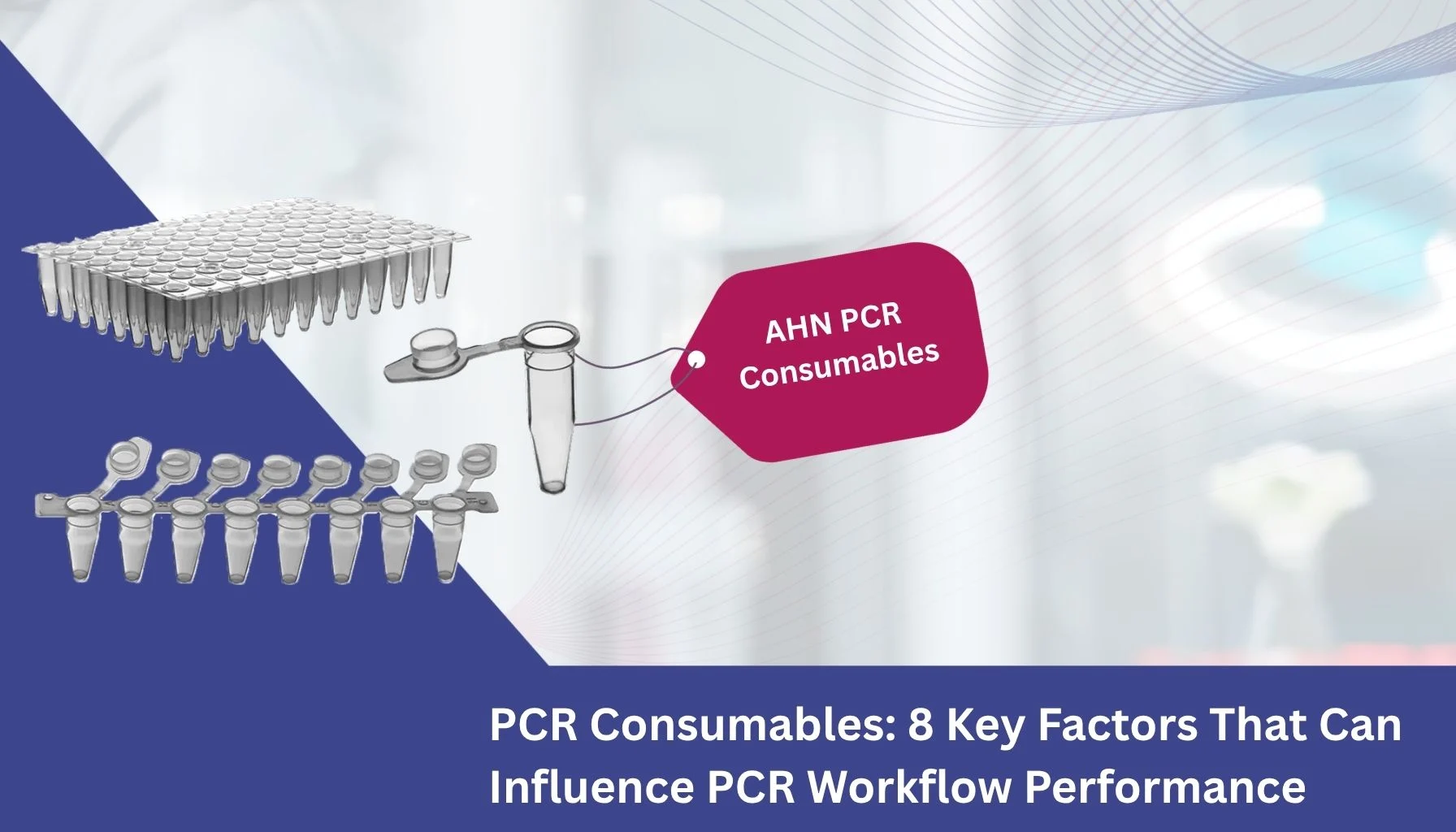
PCR experiments can be highly precise, yet small details still matter. A tube, plate, seal, or strip can influence your workflow. That makes choosing the right PCR Consumables more important than expected.
But what should laboratories actually look for? It starts with understanding how consumables support every PCR stage. From sample handling to optical measurement, every detail has importance.
AHN Biotechnologie offers PCR consumables designed around these practical laboratory requirements. Let’s explore eight aspects worth considering before your next PCR workflow.
1. Material Quality Can Influence Your PCR Workflow
PCR reactions require consumables made from reliable, high-quality materials. Poor material choices can introduce unwanted variables into experiments. AHN PCR consumables use high-quality, contamination-free materials for laboratory applications.
The products are designed for precision, reliability, and consistent performance. AHN tubes and strips also feature certified purity standards. They are free from DNase, RNase, human DNA, and PCR inhibitors. They are also free from endotoxins and other specified contaminants. This matters when reproducibility is critical across multiple PCR experiments.
2. Tube Wall Thickness Affects Heat Transfer
PCR depends on controlled and consistent temperature changes. The consumable therefore needs to support efficient heat transfer. AHN PCR tubes feature extra-thin, uniform wall thickness. This design supports optimal heat transfer during thermal cycling.
The result is improved thermal efficiency within the PCR workflow. It can also contribute to reduced cycle time during PCR. The design is especially relevant when thermocycler performance matters. Every component should work with the instrument, not against it.
3. Compatibility Should Never Become a Guessing Game
Not every PCR tube or plate suits every thermocycler. Profile and format can directly affect workflow compatibility. AHN provides PCR tubes and strips for diverse applications. PCR strips are available in both 0.1 mL and 0.2 mL formats. The 0.1 mL strips suit fast thermocyclers using low-profile tubes. The 0.2 mL strips suit standard thermocyclers using regular profiles.
AHN also offers PCR plates in different profile options. This includes low-profile 0.1 mL and regular-profile 0.2 mL plates. Choosing the correct format helps simplify your PCR workflow.
4. Optical Performance Matters for Real-Time PCR
Real-time PCR introduces another important requirement: optical measurement. The consumable needs to support accurate optical signal detection. This becomes especially important during qPCR workflows and analysis. AHN PCR tubes offer high transparency for optical measurement.
They support applications where signals are read through tube bottoms. AHN PCR strips also provide optical measurement capabilities. Ultra-clear caps support qPCR applications using optical reading through caps.
PCR plates add another useful consideration through their colour options. Frosted plates can improve qPCR signal-to-noise ratios significantly. White plates improve signal contrast and visibility during detection. These details can support more reliable qPCR signal analysis.
5. Sealing Helps Protect Samples During Thermal Cycling
Evaporation can become a practical concern during PCR experiments. Even small losses can affect sample integrity and reproducibility. AHN PCR plates feature raised well rims for secure sealing. They are designed for use with disposable adhesive sealing solutions.
AHN PCR membranes also maintain an evaporation rate below 5%. This supports reproducible results across PCR and qPCR workflows. The membranes are designed for PCR, qPCR, and sample storage. That makes sealing another important aspect of consumable selection.
6. Sample Recovery Starts With Practical Tube Design
Sometimes, the smallest design feature solves a frustrating problem. Sample recovery becomes easier when the tube supports efficient handling. AHN PCR tubes feature a V-shaped bottom for easier recovery.
The design helps access samples more conveniently after processing. It can be particularly useful when working with small reaction volumes. The tube design also considers everyday laboratory handling. Its ergonomic flat cap supports one-handed opening and closing. Small usability improvements can make repetitive workflows considerably easier.
7. Storage Conditions Require the Right Sealing Solution
PCR samples may need storage after completing the experiment. That means consumables should suit the intended storage conditions. AHN PCR seals are suitable for cold storage applications.
They can withstand temperatures as low as -40°C. For ultra-low storage around -80°C, AHN recommends aluminium sealing foil. It is specifically designed to maintain seal integrity under extreme cold. This distinction matters when samples require long-term ultra-low temperature storage. The right sealing solution helps protect sample integrity during storage.
8. Reproducibility Depends on More Than the PCR Machine
A reliable thermocycler alone cannot guarantee consistent PCR results. The consumables used throughout the workflow also play an important role. Their purity, dimensions, sealing, and optical properties all matter.
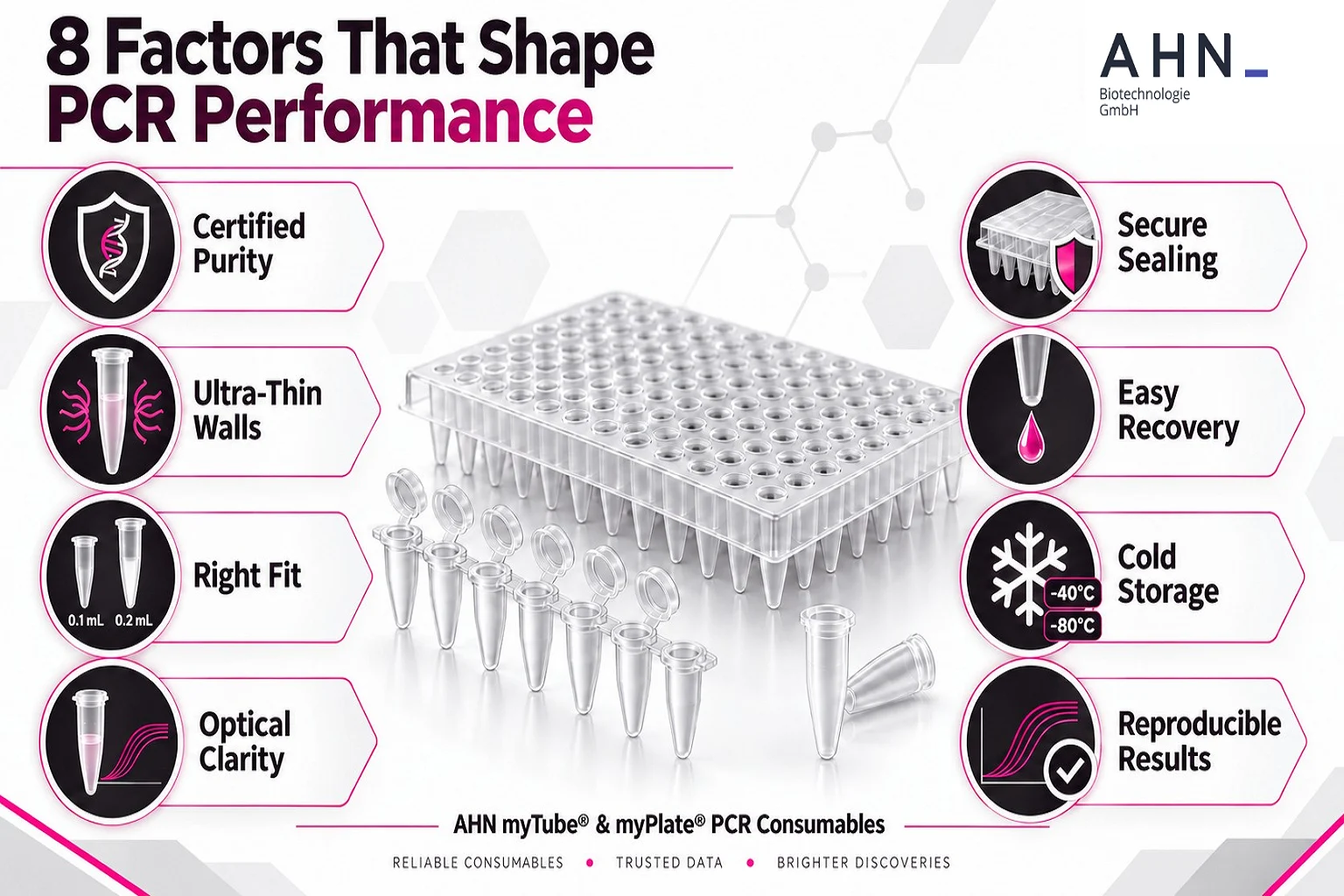
AHN PCR consumables undergo strict quality control procedures. The range is designed for consistent and reproducible laboratory performance.
- PCR tubes and strips offer certified purity and sterile handling. The products are also autoclavable at 121°C for 15 minutes.
- PCR plates and other components provide additional workflow-focused features. These include alphanumeric coding and different skirt configurations.
Together, these details support cleaner and more organised PCR workflows.
Choosing PCR Consumables With the Bigger Workflow in Mind
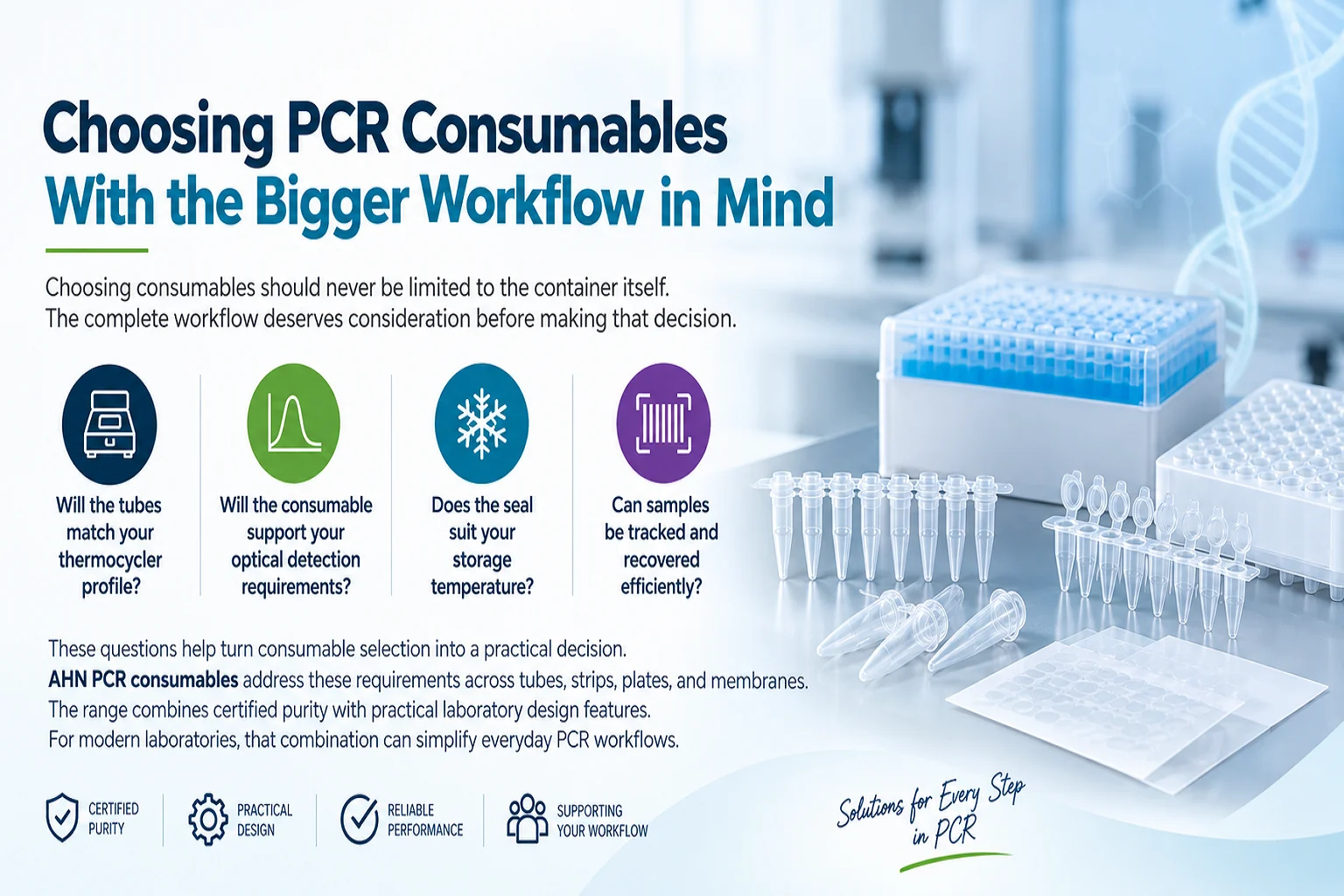
Choosing consumables should never be limited to the container itself. The complete workflow deserves consideration before making that decision.
- Will the tubes match your thermocycler profile?
- Will the consumable support your optical detection requirements?
- Does the seal suit your storage temperature?
- Can samples be tracked and recovered efficiently?
These questions help turn consumable selection into a practical decision. AHN PCR consumables address these requirements across tubes, strips, plates, and membranes. The range combines certified purity with practical laboratory design features. For modern laboratories, that combination can simplify everyday PCR workflows.
Conclusion
PCR workflows depend on precision at every practical level. The consumables you choose should support that precision consistently. From material purity to optical performance, every aspect matters. Sealing, compatibility, storage, and sample recovery matter too.
AHN Biotechnologie brings these considerations together across its PCR consumables range. Its tubes, strips, plates, and membranes support diverse PCR workflows. Because better PCR workflows begin with getting the basics right.
Frequently Asked Questions
1. What makes PCR consumables suitable for qPCR applications?
Optical performance becomes particularly important during qPCR workflows. AHN offers transparent tubes and optical PCR consumable options. Frosted and white plates support improved signal detection and visibility.
2. Which AHN PCR strip format suits fast thermocyclers?
AHN offers 0.1 mL PCR strips for fast thermocyclers. These systems typically require low-profile tube formats. The range also includes 0.2 mL strips for standard thermocyclers.
3. What storage temperatures can AHN PCR seals withstand?
AHN PCR seals support cold storage down to -40°C. For around -80°C storage, aluminium sealing foil is recommended. It is designed to maintain seal integrity under ultra-low temperatures.
4. How do AHN PCR plates support sample tracking?
AHN PCR plates feature alphanumeric coding for individual well identification. This makes sample locations easier to identify during experiments. Different skirt options also support varied thermocycler and workflow requirements.
5. How does AHN support PCR reproducibility?
AHN PCR consumables undergo strict quality control for consistent performance. Products feature certified purity and sterile handling across the range. Several products also maintain evaporation rates below five percent.
Also Read: Tips for Choosing the Right PCR Consumables