




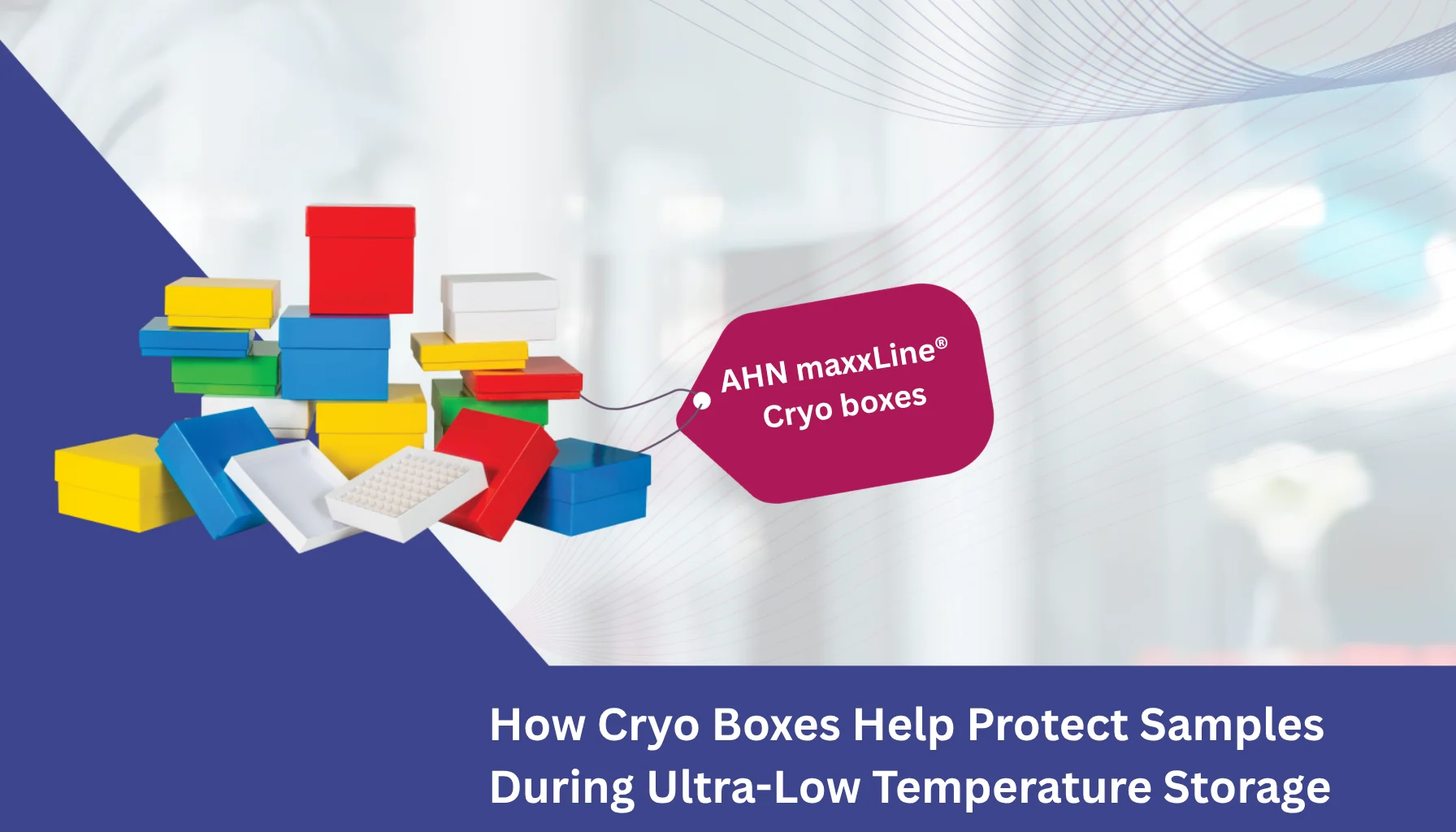
When samples enter ultra-low temperature storage, the freezer is only part of the story. The way those samples are arranged, identified, handled, and stored also matters. A poorly suited storage box can create unnecessary problems during retrieval. Moisture can affect cardboard boxes. Inadequate organization can slow sample identification. Repeated temperature changes can also put storage materials through demanding conditions.
This is where the right cryo box becomes more than a container. A well-designed cryobox creates a structured layer of protection around cryovials. It helps laboratories make better use of freezer space while keeping samples organized and accessible.
AHN Biotechnologie offers Cryo boxes that are designed around these practical requirements. They are available in both cardboard and polypropylene plastic variants, giving laboratories the flexibility to choose according to their storage, durability, and sustainability needs.
Start with the sample, not the box
Every cryopreservation workflow has its own storage requirements. Different cryovials have different dimensions. Different laboratories also have different priorities. Some may need reusable storage that can withstand demanding temperatures. Others may prioritize recyclable materials and flexible box configurations.
That makes a universal storage solution difficult.
AHN maxxLine® Cryo boxes approach this challenge with two material options:
- Cardboard cryoboxes for moisture resistance, flexibility, and recyclable storage.
- Plastic cryoboxes for thermal stability, durability, and repeated use.
This gives laboratories a practical choice without compromising the basic need for organized cryovial storage.
The real challenge is what happens inside the freezer
A cryobox may look simple from the outside. Inside, however, it has an important job. Samples need to remain properly positioned. Identification needs to remain clear. Storage capacity needs to be used efficiently. And the box itself must tolerate the conditions it is exposed to.
For plastic cryoboxes, AHN uses polypropylene designed to withstand temperatures from -150°C to +121°C. The boxes are also designed for durability and reusability, including after autoclaving.
That matters because ultra-low temperature storage is not an environment where ordinary laboratory storage materials can simply be assumed to perform reliably.
Organization becomes part of sample protection
Imagine searching through hundreds of cryovials for one specific sample. The problem is no longer just storage capacity. It is retrieval.
A structured grid can turn a crowded freezer inventory into a system that is easier to navigate. AHN plastic cryoboxes feature molded alphanumeric grids. The markings remain intact over the box’s lifespan, helping researchers locate samples more efficiently.
The 9×9 configuration also makes efficient use of the available footprint. According to AHN, it can hold 23% more samples without increasing the box footprint. For laboratories managing large sample collections, that can translate into a more organized storage strategy.
When moisture becomes the problem
Plastic is not the only option. Cardboard cryoboxes can also be highly practical for cryogenic storage when they are engineered for the environment.
AHN cardboard cryoboxes feature a hydrophobic coating that helps repel moisture. This provides protection against spills and freeze-thaw cycles. The material is also resistant to mild organic solvents and alcohols.
That is particularly relevant in laboratory environments where condensation, spills, and repeated handling can gradually affect conventional cardboard storage materials. The result is a cardboard option designed for a much more demanding application.
Storage capacity should not come at the cost of flexibility
A laboratory rarely works with just one type of cryovial. The storage system therefore needs to adapt.
AHN plastic cryoboxes are designed for cryovials ranging from 0.5 mL to 5.0 mL and are compatible with AHN and other commonly used cryovial brands.
The cardboard range provides further flexibility through different grid configurations and box heights. Depending on the model, boxes are available with 9×9 or 10×10 grids, while heights range from 32 mm to 130 mm.
This matters when laboratories need to build storage around their existing cryovials rather than redesigning their workflow around a single box format.
Sustainability can be part of the storage decision
Cryogenic storage is built for long-term research. That makes the material choice worth considering from more than one perspective.
AHN cardboard cryoboxes are manufactured using sustainable practices and are recyclable. For laboratories looking to reduce the environmental impact of routine laboratory consumables, they offer an alternative to plastic storage.
At the same time, the plastic variants are designed for durability and reuse. So the choice is not simply cardboard versus plastic. It is about selecting the storage format that fits the laboratory’s workflow, application, and priorities.
A better cryogenic storage workflow starts with the details
Ultra-low temperature storage demands more than a freezer capable of reaching the required temperature. It demands a storage system that works with the samples.
That means considering:
- Material: Can the box tolerate the storage environment?
- Organization: Can researchers quickly identify and retrieve samples?
- Capacity: Does the box make efficient use of freezer space?
- Compatibility: Does it accommodate the cryovials already used in the laboratory?
- Durability: Can it withstand repeated handling and demanding conditions?
- Compatibility: Can the configuration adapt to different sample requirements?
- Sustainability: Does the storage option align with the laboratory’s environmental priorities?
These considerations turn a seemingly simple storage accessory into an important part of the cryopreservation workflow.
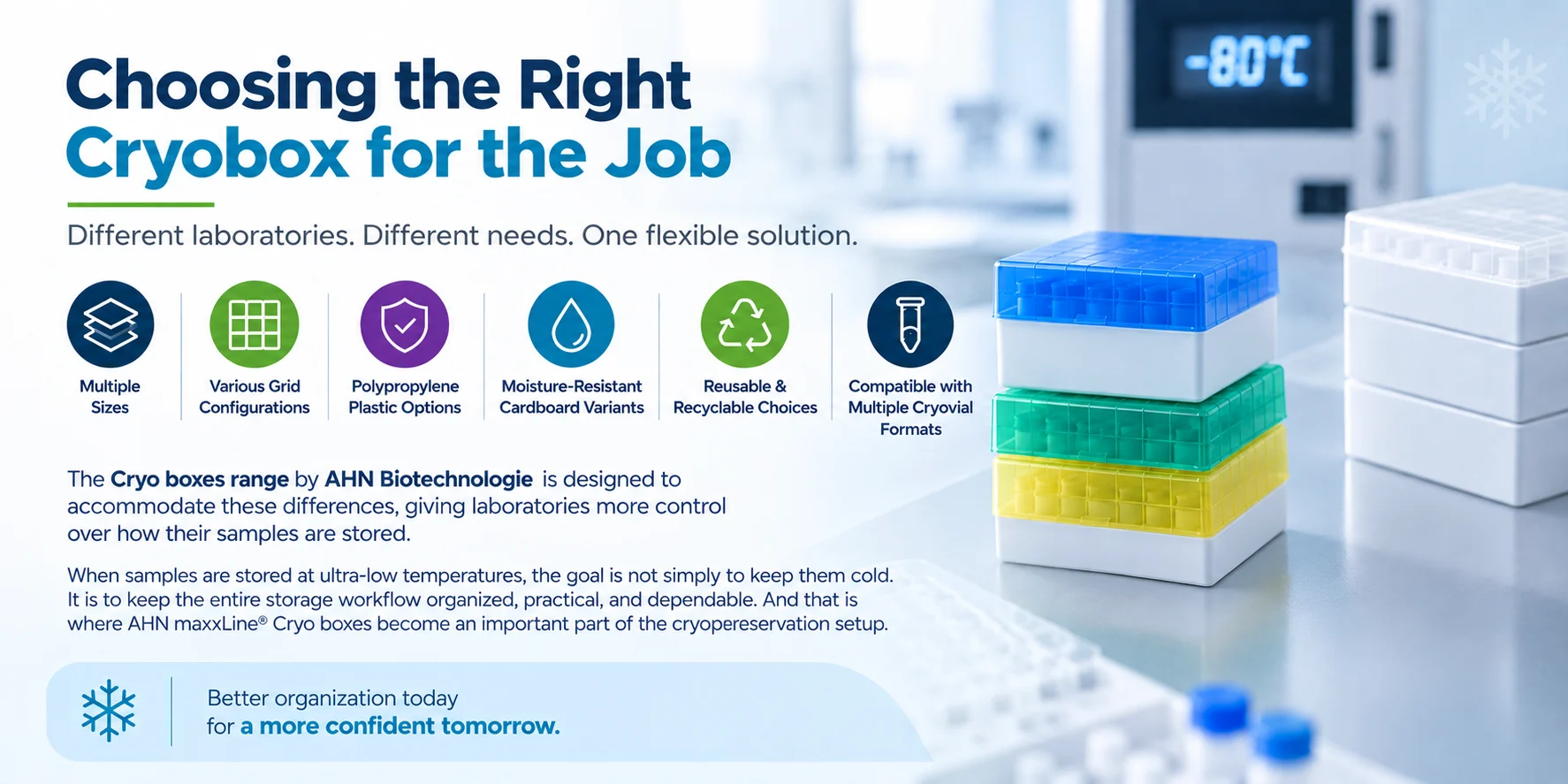
Choosing the right cryobox for the job
There is no single storage requirement across every laboratory. A high-throughput research facility may prioritize sample density and repeat use. Another laboratory may prefer recyclable cardboard storage with flexible configurations. Others may need different box heights or grid arrangements for different cryovials.
The Cryo boxes range by AHN Biotechnologie is designed to accommodate these differences.
With polypropylene plastic options, moisture-resistant cardboard variants, multiple grid configurations, different sizes, and compatibility across cryovial formats, the range gives laboratories more control over how their samples are stored.
When samples are stored at ultra-low temperatures, the goal is not simply to keep them cold.
It is to keep the entire storage workflow organized, practical, and dependable. And that is where AHN maxxLine® Cryo boxes become an important part of the cryopreservation setup.
Frequently Asked Questions
1. What should laboratories consider when choosing cryoboxes for ultra-low temperature storage?
Material compatibility, temperature resistance, cryovial compatibility, grid configuration, storage capacity, durability, and sample identification are key considerations. The right choice should also reflect whether the laboratory prioritizes reusable plastic storage or recyclable cardboard options.
2. Are cardboard cryoboxes suitable for cryogenic storage?
They can be, provided they are engineered for the conditions. AHN cardboard cryoboxes feature a hydrophobic coating designed to resist moisture, spills, freeze-thaw cycles, mild organic solvents, and alcohols.
3. How does cryobox design affect sample organization?
Grid configuration and identification features directly influence how easily samples can be located. AHN plastic cryoboxes use molded alphanumeric grids, while the range includes 9×9 and 10×10 configurations for different storage requirements.
4. How can cryoboxes improve freezer-space utilization?
Box footprint, grid density, and vial compatibility all influence storage efficiency. AHN’s 9×9 plastic cryobox configuration is designed to hold 23% more samples without increasing the box footprint, helping laboratories use available freezer space more efficiently.


